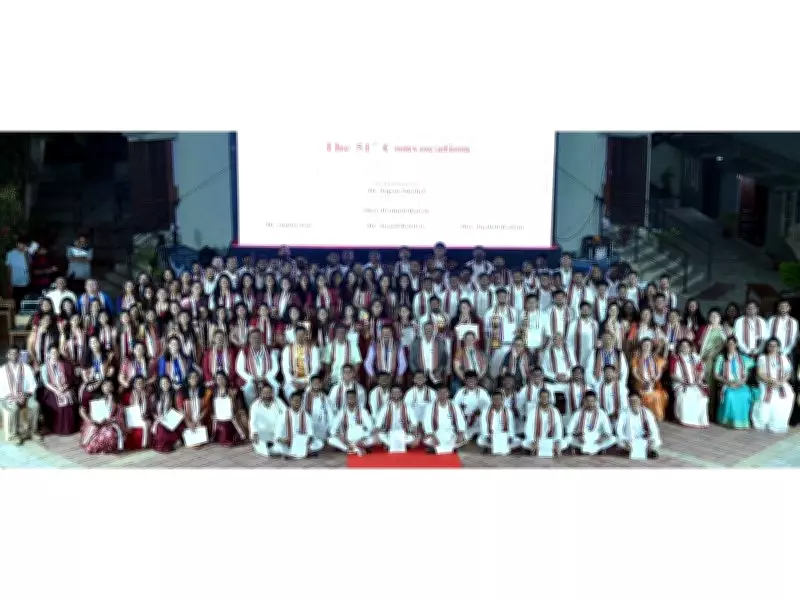
Dr. Tapan Singhel Highlights Problem-Solving as the Ultimate Future Skill at IMD Convocation
In a compelling address at the 51st convocation ceremony of the Institute of Management Development and Research (IMD), Dr. Tapan Singhel, a prominent business leader, delivered a powerful message about the evolving demands of the professional world. He stressed that problem-solving ability will emerge as the most critical strength for individuals navigating the complexities of the future.
The Shift from Traditional Skills to Adaptive Thinking
Dr. Singhel elaborated on how the rapid pace of technological advancements and global challenges is reshaping the landscape of work. He noted that while technical knowledge and academic credentials remain important, they are no longer sufficient on their own. The real differentiator, according to him, will be the capacity to analyze situations critically, devise innovative solutions, and implement them effectively in real-world scenarios.
This perspective underscores a broader trend in education and industry, where adaptability and creative thinking are increasingly valued over rote learning. Dr. Singhel urged the graduating students to cultivate a mindset that embraces uncertainty and views problems as opportunities for growth and innovation.

Implications for Business Education and Corporate Strategy
The speech also touched on the implications for business schools and organizations. Dr. Singhel suggested that institutions like IMD must continue to evolve their curricula to foster problem-solving skills through case studies, experiential learning, and interdisciplinary approaches. For corporations, he emphasized the need to prioritize hiring and developing employees who demonstrate strong analytical and decision-making capabilities.
He highlighted that in an era marked by disruptions such as digital transformation and economic volatility, companies that empower their teams to solve complex issues will gain a competitive edge. This aligns with global trends where leadership is increasingly defined by the ability to navigate crises and drive sustainable solutions.
Key Takeaways for Graduates and Professionals
Dr. Singhel's address provided actionable insights for the new graduates and professionals alike:
- Embrace Lifelong Learning: Continuously update skills to stay relevant in a changing environment.
- Develop Critical Thinking: Practice analyzing problems from multiple angles to find effective solutions.
- Foster Collaboration: Work with diverse teams to leverage different perspectives and enhance problem-solving outcomes.
- Stay Resilient: View setbacks as learning experiences that build problem-solving prowess.
By focusing on these areas, individuals can position themselves as invaluable assets in the future workforce, capable of driving innovation and progress across various sectors.