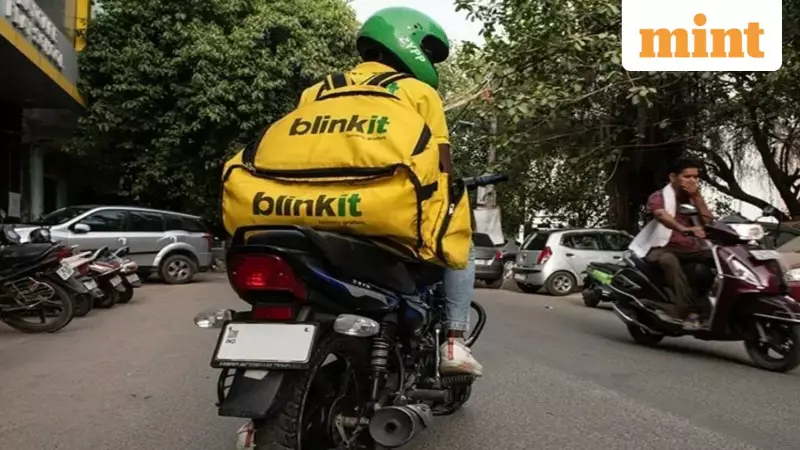
Quick Commerce Debate Exposes Governance Gaps
India currently faces a heated debate about quick commerce platforms. This discussion centers on what the fast-delivery model supposedly represents. Critics point to gig worker exploitation, unsafe streets, and a disregard for human dignity in the name of convenience. Recently, India's labor ministry intervened. It urged quick-commerce companies to tone down their '10-minute delivery' promises. Opposition parties and unions have denounced the entire model. They see fertile political ground in this issue.
What began as a niche conversation among venture capitalists and urban consumers has entered mainstream political discourse. This broader engagement is welcome. However, the current debate suffers from a fundamental confusion. It collapses the distinction between market responsibilities and state obligations.
The Road Safety Conflation
One major criticism involves road safety. The argument suggests faster deliveries lead to more rushed riders. This rush causes more accidents, making quick commerce unsafe. Therefore, the model should be restrained. This logic is fragile. India has maintained one of the world's worst road-safety records for decades.

In 2021, India accounted for just 1% of global vehicles but 11% of road accidents. This tragedy does not happen because groceries arrive quickly in Bengaluru, Mumbai, or Delhi. It stems from a lethal combination of factors. These include poorly designed roads, corruption in transport departments, and weak driver education. Abysmal signage, sudden potholes, and absent traffic enforcement also contribute.
Union minister Nitin Gadkari has acknowledged this combination as the main reason for road accidents. If mere association with speed indicts a business model, India should rethink fast retail payments. The revered Unified Payments Interface enables transaction scams through its speed. Efficient movement from point A to point B, whether on physical or digital roads, is not a market failure. It defines economic activity. Speed is not the enemy. The lack of commensurate safeguards is the real problem.
Ensuring safety in shared public spaces like roads falls within the state's core functions. Outsourcing this duty to private platforms is intellectually lazy. It targets visible, successful businesses for political convenience.
Beyond Roads: A Pattern of Blame-Shifting
This reasoning extends beyond road safety. Consider environmental regulation. India has an extended producer responsibility regime. It makes manufacturers accountable for plastic waste. This is fair. However, waste segregation and collection remain absent in most urban neighborhoods, including the national capital. Should FMCG companies bear blame for the state's inability to provide basic municipal services?
This pattern repeats endlessly. When enforcement fails, it becomes tempting to preach to markets rather than fix institutions. The state must perform its fundamental duties.
Businesses Cannot Replace the State
This confusion extends to new gig-worker cesses introduced by various states. These levies ostensibly fund worker welfare. The idea sounds noble. Yet, examining similar funds like District Mineral Funds reveals problems. Most well-intentioned funds suffer from weak accountability and opaque deployment. Adding new levies while increasing business friction is not genuine reform.
India already burdens businesses with bureaucratic inertia, slow dispute resolution, and regulatory uncertainty. Consider minimum wage enforcement in traditional sectors. Agriculture, construction, and manufacturing employ far more Indians than gig platforms ever will. These sectors are rife with violations. However, no strong minimum wage movement exists there because compliance can be gamed. Gig platforms, which are not legal employers, present an easier target for criticism.
Evidence Must Guide Policy
Political interventions should pass a basic evidentiary test. Recent union calls for gig workers to boycott deliveries on New Year's Eve had negligible impact. Delivery records were broken that very day across platforms. This reality prompts an uncomfortable question. Are these unions truly representative of young Indians trying to make ends meet?

About 800 million Indians rely on food subsidies yet aspire for upward mobility in a competitive, smartphone-driven economy. Symbolic gestures may generate headlines. They are no substitute for understanding how people actually survive and work.
The Need for Clear Responsibilities
Ultimately, markets must operate within the law. Businesses cannot take consumers, vendors, employees, or partners for granted. Stricter standards for grievance redressal may be necessary. However, the state must fulfill its own duties. It must enforce traffic laws, design safe roads, uphold labor standards, and administer welfare funds transparently.
We cannot take the easiest route. Grabbing the fastest-growing, most visible businesses by the collar and demanding they fill institutional failures is misguided. Continuing down this path risks hollowing out both the state and the market. Then, we truly will have no one left to blame for systemic failures.