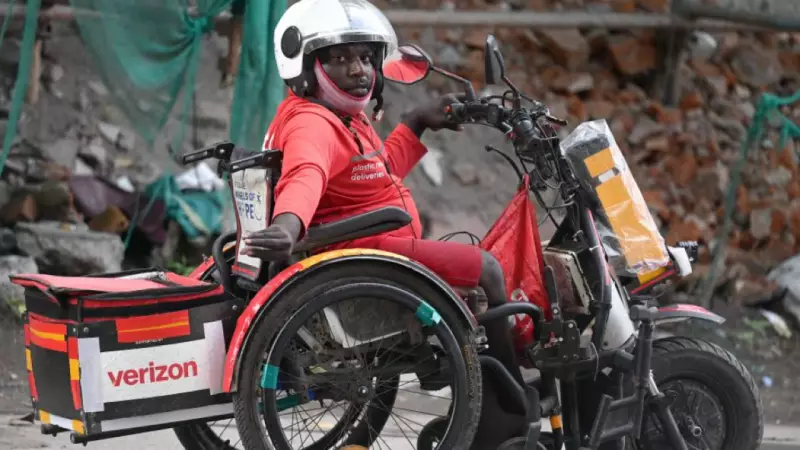
Every evening at 7pm sharp, Lakshmanan Angamuthu sets out on his motorized wheelchair. He navigates the bustling bylanes of Saidapet in Chennai, dodging traffic, speeding cars, and bumpy pothole-ridden roads. His mission is simple yet vital: to deliver food orders right to customers' doorsteps.
A Daily Grind with Determination
"I aim to complete as many deliveries as possible within three hours, covering about 40 kilometers," Lakshmanan explains. "After that, my wheelchair battery runs out, and I must return home to recharge it." This nightly routine is part of his job as a delivery agent for food aggregator Zomato, a role he took up two years ago.
From Unemployment to Empowerment
Before joining Zomato, Lakshmanan worked at a telephone exchange for over seven years. When his contract ended, he found himself suddenly unemployed. "I felt dejected and useless," recalls the 33-year-old polio survivor. "The thought that I couldn't do anything for myself kept eating away at me."

Discovering that food delivery platforms welcome persons with disabilities gave him new hope. "I joined immediately, and it has worked out for the better," he says with pride. His income saw a significant jump—from just Rs 5,000 a month at the telephone exchange to around Rs 20,000 now. "I'm able to save money and even make investments," he adds.
A Rigorous Schedule for Independence
Lakshmanan's day starts early at 8am from his home in Saidapet. He delivers orders until 3pm, then heads back to rest and recharge his wheelchair. By 7pm, he's back on the road, working till 10pm. While this schedule might seem exhausting to many, Lakshmanan finds it fulfilling. "Knowing that I can be independent motivates me to push through the body pain," he shares.
Challenges on the Road
Despite his resilience, Lakshmanan faces hurdles. Some customers can be inconsiderate, insisting he deliver food to their doorstep even after learning he cannot walk. "I usually send the food through someone else," he says. "But if customers could come to collect it, it would be a big help."
Infrastructure issues also pose a problem. "We get only one battery with the wheelchair," he points out. "If we were provided an additional battery at a concessional rate, we could work longer hours and earn more without constantly worrying about the charge."
A Message of Inspiration
Lakshmanan remains committed to his work. "I will continue as long as I can," he asserts. His ultimate goal is to inspire others with disabilities. "I hope to encourage people to be self-reliant and show that challenges can be overcome with determination."
His story highlights not just personal triumph but also the broader potential for inclusivity in the gig economy. By embracing diversity, companies like Zomato are enabling individuals like Lakshmanan to lead independent, productive lives.