Bengaluru: Did you know at least five litres of water is required to produce one litre of beer? But where does all that water go? In Bengaluru, home to nearly 88 breweries, the industry is increasingly focused on reducing its water footprint through a combination of effluent treatment plants, wastewater recycling systems and circular waste management practices.
Regulatory Framework and Industry Efforts
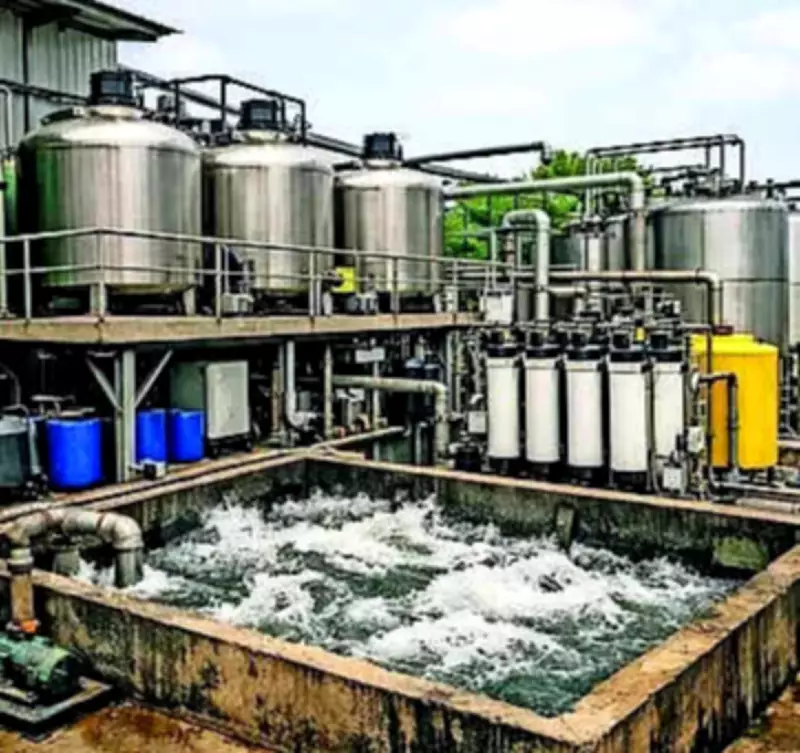
According to the Karnataka State Pollution Control Board (KSPCB), breweries, pubs and other food and beverage establishments are required to install and operate effluent treatment plants (ETPs) and comply with strict waste management norms as part of their consent to establish (CTE) and consent to operate (CTO) approvals.
Breweries that spoke to TOI said they are also working towards improving water-to-beer ratios and expanding wastewater treatment capacity. Many are using effluent treatment plants, IoT-based monitoring systems and process innovations such as CIP systems, heat exchangers and RO recovery to reduce freshwater consumption and improve resource efficiency. Treated wastewater is being reused for non-product applications, while by-products like spent grain are diverted for cattle feed and other uses, and packaging waste is systematically recycled.

Case Studies: How Breweries Are Achieving Efficiency
Nikhil Menon, co-founder and COO of Mannheim Craft Brewery, said: "We use less than 4.5 litres of water to produce one litre of beer and aim to bring this below 4:1 through real-time monitoring. Wastewater is treated at our on-site ETP and reused for public green spaces and construction activities. We also follow a circular waste management model, diverting spent grain for cattle feed and recycling glass, paper, plastic and metal through authorised channels."
Megha Dalimbe, master brewer at Byg Brewski, said: "We monitor water use batch-wise, reuse rinse water wherever possible and treat brewery wastewater for activities such as gardening and cleaning. We also repurpose spent grain as cattle feed, recycle packaging materials, and continue investing in water recycling and waste management despite the significant costs involved."
Aadithya Eashwaran, executive director and head brewer at American Brew Works, said: "We reduce freshwater consumption by treating wastewater for reuse, recycling cooling water, using automated cleaning systems, and capturing reject water from our RO plant. We also improve fermentation efficiency to minimise beer loss and, in larger operations, recover and reuse CO₂ generated during fermentation as part of our sustainability efforts."
Challenges and Industry Perspectives
Industry players say the transition comes with challenges. Setting up and maintaining effluent treatment plants, water recycling systems and CO₂ recovery units requires significant capital investment. In addition, processes such as yeast recovery and wastewater reuse require careful monitoring and operational planning to remain effective at scale.
Shivkumar Eashwaran, chairman of the Indian Chamber of Commerce, said: "Organised large breweries generally follow strict sustainability norms, including low water usage and in-house consumption that avoids plastic packaging as beer is served in glass. Overall, the system is designed to ensure near-complete reuse of inputs and minimal environmental impact, unlike smaller, less regulated units."