

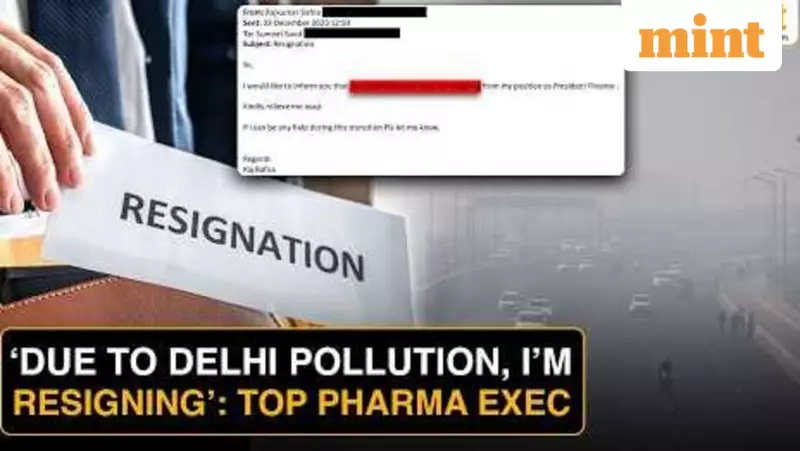
In a move highlighting the severe impact of environmental conditions on corporate life, a senior executive at a major Indian pharmaceutical company has resigned, explicitly blaming the hazardous pollution levels in the national capital.
Executive Cites Health Hazard, Seeks Immediate Relief
Rajkumar Bafna, the Finance President of Delhi-based Akums Drugs and Pharmaceuticals Limited, submitted his resignation on 3rd December 2025. The reason stated in his resignation, as revealed through an official exchange filing, was the critically poor air quality in Delhi. His plea to the company management was direct and urgent: "Relieve Me ASAP." This phrase underscores the immediate health concern that the toxic air posed for him, leading to this drastic career decision.
Details of the Resignation and Corporate Context
The resignation brings to the forefront the growing challenge of environmental factors in talent retention, especially in North India. Akums Drugs and Pharmaceuticals is a significant player in the domestic pharma sector. The departure of a C-suite level executive like Bafna, who oversaw the finance vertical, is a notable event. The exchange filing confirms that the resignation was tendered solely due to the "pollution level" in Delhi, making it a rare and stark instance of an environmental issue triggering a high-profile corporate exit.

Broader Implications for Business and Policy
This incident is more than a personnel change; it is a loud alarm bell for corporations and policymakers. When a city's air quality becomes a primary reason for senior professionals to leave their jobs, it signals a deep-rooted crisis affecting economic stability. The case of Rajkumar Bafna may prompt other professionals and companies to reconsider basing operations in severely polluted regions. It also adds a new dimension to the corporate social responsibility discourse, pushing environmental welfare from a peripheral concern to a core business imperative linked directly to human resources and operational continuity.
Ultimately, this resignation story transcends individual choice and points to the urgent need for effective and sustained action to improve air quality in urban centers like Delhi. The health of a city's environment is inextricably linked to the health of its economy and its ability to retain top talent.






