

Investors Prepare for Union Budget 2026 Amid Market Uncertainty
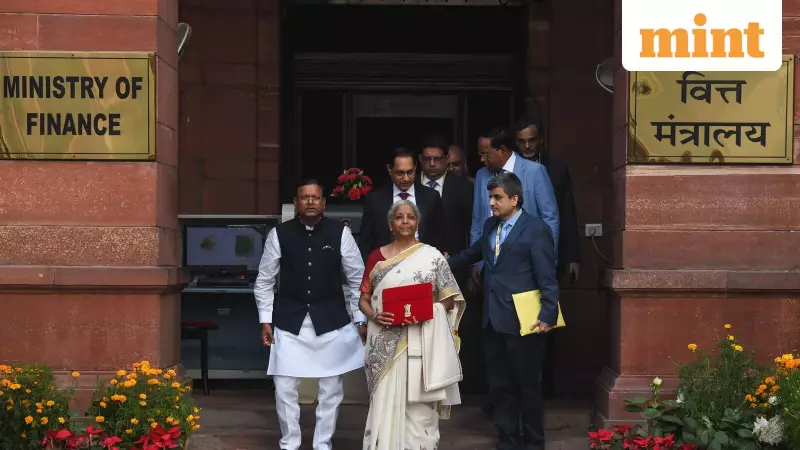
The Union Budget, India's major annual financial event, is only half a month away. This crucial policy announcement will set the tone for markets and create sectoral opportunities for investors. Finance Minister Nirmala Sitharaman will present the Budget on February 1. Investors now have an ideal window to assess and adjust their portfolios to benefit from expected policy moves.
Current Market Sentiment and Global Pressures
Stock market sentiment has remained subdued in January. Several factors contribute to this cautious mood. A stalled trade deal with the United States and fresh tariff threats from US President Donald Trump have created headwinds. Foreign portfolio investors have engaged in relentless selling, adding pressure. The Nifty 50 index has already declined by 1.4% during the first ten trading days of the year.
This year's Budget gains extra significance due to global conditions. An increasingly inward-looking policy-making environment and elevated geopolitical risks shape the backdrop. Analysts at ICICI Securities anticipate manufacturing will emerge as a key focus area. The government aims to mitigate the impact of US tariffs on Indian exports.

President Trump has imposed 25% reciprocal tariffs on India. An additional 25% tariff applies in response to India's continued oil imports from Russia. Market participants also worry about potential legislation. Such legislation could grant Trump authority to impose even higher levies, possibly up to 500%, on Indian goods.
Key Expectations from Budget 2026
Analysts expect the Budget to concentrate on developmental areas. Manufacturing and infrastructure should receive attention. Reducing the debt-to-GDP ratio remains another probable goal. ICICI Securities notes visible pressure to shore up revenue after last year's tax cuts. A recent hike in excise duty on tobacco products illustrates this trend. The brokerage firm expects further measures, including raising disinvestment targets.
Dr. Ravi Singh, Chief Research Officer at Master Capital Services, shared his perspective. He stated that the overall market view remains cautiously optimistic ahead of the Union Budget. Investors generally anticipate the government will maintain its pro-growth and reform-oriented policy stance. Dr. Singh believes any measures boosting consumption could bolster sentiment further. Tax cuts or increased spending in urban and rural regions would serve this purpose.
Vaqar Javed Khan, Team Lead for Fundamental Equities at Angel One, commented on policy expectations. Markets expect the government to reinforce fiscal discipline. Setting a lower FY27 fiscal deficit target after meeting the FY26 goal would help rebuild FPI confidence. This becomes more feasible as global interest rates ease in 2026. Regarding taxation, Khan noted discussions around Long-Term Capital Gains (LTCG) and Securities Transaction Tax (STT). However, he expects policy stability rather than sweeping changes. Predictability should take precedence over populist measures.
Shrikant Chouhan, Head of Equity Research at Kotak Securities, listed his key Budget expectations. Markets broadly expect the Budget to strike a balance between growth acceleration and fiscal discipline. Chouhan anticipates an ambitious growth target of around 8–8.5% for the next financial year. This would signal confidence in India's medium-term economic trajectory.
Furthermore, Chouhan believes higher capital expenditure is likely. A potential range of ₹12–12.2 lakh crore could drive infrastructure development, employment generation, and private investment. He also sees continued emphasis on fiscal prudence. A gradual reduction in the fiscal deficit should accompany further simplification of the tax framework. Easing compliance burdens appears more probable than introducing new exemptions or deductions.
Lastly, Chouhan opined that focus may remain on Production Linked Incentive (PLI) schemes. Multi-year funding visibility and stable tax incentives for deep-tech sectors like artificial intelligence, semiconductors, and biotechnology could feature in the Budget.

How to Position Portfolios Ahead of the Budget
Budget announcements typically cause short-term volatility. However, the medium-term market direction will depend on the Budget's balance. Growth support, fiscal restraint, and policy stability will determine outcomes. Against this backdrop, structuring portfolios correctly becomes imperative to capitalize on announcements.
Analysts emphasize that Budget announcements are difficult to predict. Therefore, investors should not view the Budget as an opportunity for speculation based on single announcements. Khan from Angel One advocates a core-and-satellite strategy. He advises investors to focus on large-cap stocks. These offer better risk-reward in the current environment of geopolitical uncertainty and US trade-related risks. Their stronger balance sheets and earnings stability provide a cushion.
Khan added that rate-sensitive sectors should continue to benefit. With RBI rate cuts already feeding through, real estate, autos, and NBFCs stand to gain. Any pre-Budget volatility can be used to selectively accumulate defensive names like IT and pharma.
Harshal Dasani, Business Head at INVAsset PMS, recommended a disciplined approach. Avoiding leverage, staying diversified, and keeping expectations realistic tend to work better than chasing thematic narratives. He stated that the more durable strategy involves remaining invested in businesses with strong balance sheets. Consistent cash generation and the ability to navigate policy changes without relying on incentives are crucial traits.
Abhinav Tiwari, Research Analyst at Bonanza, noted the budget's focus on manufacturing over the years. He suggested investors align portfolios with capex-led themes. Sectors directly benefiting from government spending are better positioned. Defence, infrastructure, capital goods, power, and manufacturing-linked PSUs fall into this category.
However, Tiwari expressed caution about consumption-led bets. Since this budget is unlikely to offer major tax relief or subsidy expansion, an immediate consumption boom driven by policy seems improbable. Consumption recovery will likely remain gradual and uneven. Manufacturing remains a key theme under Make in India. Continued emphasis on PLI-linked sectors such as electronics, semiconductors, chemicals, pharmaceuticals, and autos is expected.
Disclaimer: This story is for educational purposes only. The views and recommendations expressed are those of individual analysts or broking firms. We advise investors to consult with certified experts before making any investment decisions, as market conditions can change rapidly and circumstances may vary.





