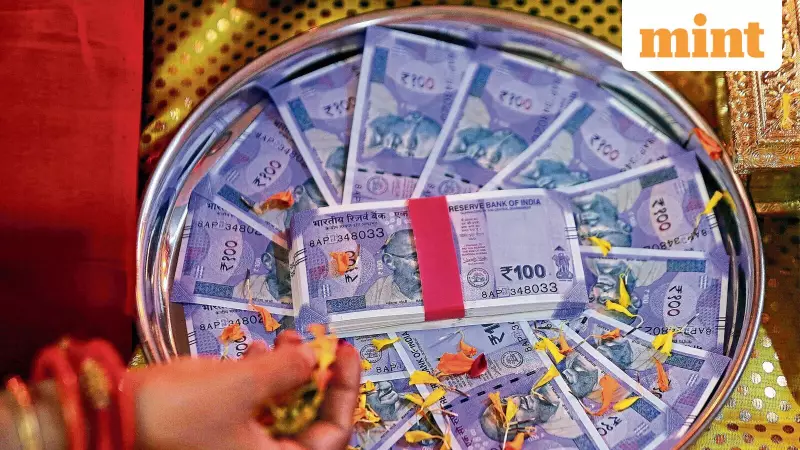
The Indian rupee continued its downward slide on Tuesday, closing at a fresh record low against the US dollar. The domestic currency depreciated by 7 paise to settle at 90.97 (provisional) per dollar. This marks a new all-time closing low for the rupee.
Key Factors Behind the Rupee's Decline
Forex traders pointed to several immediate pressures. Strong dollar demand from metal importers created significant selling pressure on the rupee. At the same time, persistent outflows of foreign institutional investor (FII) funds from Indian markets dented overall investor sentiment.
Geopolitical Uncertainties and Risk Aversion
Rising geopolitical uncertainties played a major role. Renewed expansionary signals from the United States have increased risk aversion globally. This environment keeps emerging market currencies, including the rupee, under constant pressure.

"The Indian rupee traded with a negative bias and slipped below the 91-mark on risk aversion in global markets and persistent FII outflows," said Anuj Choudhary, Research Analyst at Mirae Asset ShareKhan. He added that a weak dollar and intervention by the Reserve Bank of India (RBI) prevented a sharper fall.
Intraday Movement and Historical Context
At the interbank foreign exchange market, the rupee opened the day at 90.91. It then lost ground, touching an intraday low of 91.06 before paring some losses to end at 90.97. On Monday, the rupee had closed at 90.90, after depreciating 12 paise.
Looking back, the rupee reached its lowest intra-day level of 91.14 on December 16, 2025. Its previous lowest closing level was 90.93, also recorded on that date. Today's close of 90.97 therefore sets a new benchmark for weakness.
Broader Market Conditions
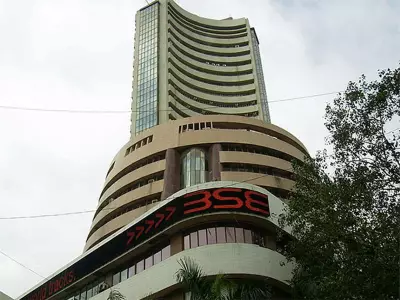
The domestic stock market reflected the gloomy sentiment. The benchmark Sensex tumbled a massive 1,065.71 points to settle at 82,180.47. Similarly, the Nifty index dived 353 points to close at 25,232.50. This slump was largely triggered by the ongoing exodus of foreign capital.
Exchange data showed that foreign institutional investors were net sellers. They offloaded equities worth ₹3,262.82 crore on Monday alone, continuing a trend of outflows.
External Indicators and Analyst Outlook
Meanwhile, the dollar index, which measures the greenback's strength against a basket of six major currencies, was trading 0.91 percent lower at 98.48. In the commodities market, Brent crude futures, the global oil benchmark, were trading at USD 63.94 per barrel.
Analyst Anuj Choudhary provided further insight into the near-term outlook. He noted the rupee is expected to trade with a negative bias due to foreign fund outflows and global risk aversion, particularly concerning the US stance on Greenland.
"Uncertainty over trade deal talks may also pressurise the rupee," Choudhary stated. "However, a weak dollar and any RBI intervention may support the rupee at lower levels. The USD-INR spot price is expected to trade in a range of 90.70 to 91.25."
In summary, a combination of domestic and global factors converged to push the rupee to a new historic low. Market participants will closely watch FII activity, RBI moves, and global geopolitical developments for future direction.