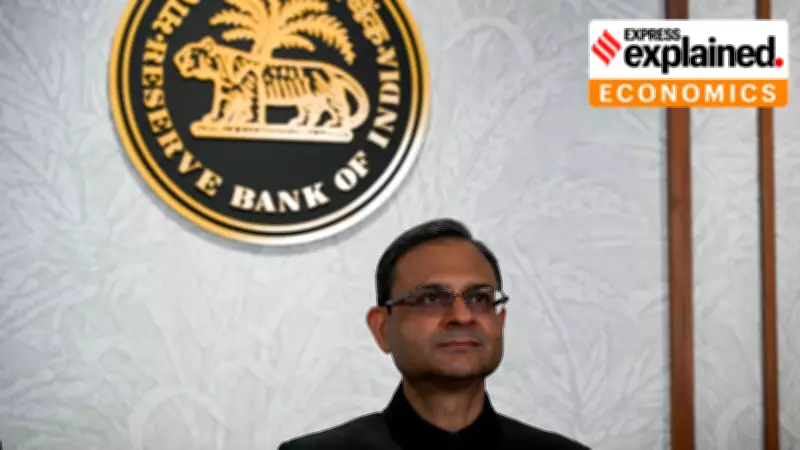
RBI Maintains Status Quo on Interest Rates, Revises Growth Projections Upward
The Reserve Bank of India's Monetary Policy Committee (MPC) has decided to keep the key policy rate unchanged at 5.25 percent, marking a pause in its monetary easing cycle. This decision comes after a series of rate cuts throughout 2025 that totaled 125 basis points, with the most recent reduction occurring in December.
Policy Stance and Economic Context
The MPC has opted to retain its neutral policy stance, indicating that the central bank will maintain flexibility to adjust monetary policy based on evolving economic conditions. This decision follows closely on the heels of India's recent trade agreements with the United States, European Union, Oman, and New Zealand, which are expected to provide additional support to the economy amid global uncertainties.
RBI Governor Sanjay Malhotra emphasized that the policy decision reflects a combination of favorable factors including a positive inflation outlook, strong domestic growth momentum, and measures announced in the Union Budget that are likely to boost economic activity.

Revised Economic Projections
The central bank has upwardly revised its growth and inflation forecasts for the current fiscal year:
- GDP Growth: Revised to 7.4 percent from the previous projection of 7.3 percent for FY26
- Retail Inflation: Adjusted to 2.1 percent from the earlier estimate of 2 percent
These revisions come as the government's first advance estimates also peg real GDP growth at 7.4 percent for FY26, indicating strong underlying economic momentum.
Inflation Dynamics and External Factors
Headline inflation remained below the RBI's tolerance band during November and December 2025, with the Consumer Price Index (CPI) increasing from 0.71 percent to 1.33 percent in December. Despite this uptick, inflation continues to remain comfortably within the central bank's 2-6 percent target range.
Governor Malhotra noted that the slight upward revision in inflation projections is primarily attributed to increased prices of precious metals, which contribute approximately 60 to 70 basis points to the inflation outlook. Underlying inflation, however, remains low and manageable.
Impact on Borrowers and Financial Markets
With the repo rate remaining unchanged, lending and deposit rates are expected to stay broadly stable in the near term. Borrowers with loans linked directly to the repo rate will not experience immediate changes to their equated monthly installments (EMIs), providing certainty in repayment obligations.
However, interest rates on loans tied to the marginal cost of funds-based lending rate (MCLR) could still see adjustments as banks retain flexibility to revise these rates based on funding costs, liquidity conditions, and deposit mobilization strategies.
Growth Drivers and Consumption Outlook
Economic growth continues to be supported by robust consumption, which is projected to expand by approximately 7 percent in FY26. Several factors have bolstered the consumption outlook:
- Income tax reductions announced in the FY26 Union Budget
- GST rate rationalization measures
- Subdued inflation environment
- Previous RBI rate cuts that have transmitted through the economy
The successful completion of trade agreements, particularly with the United States and European Union, is expected to boost India's exports and attract foreign investments, providing additional growth momentum over the medium to long term.
External Risks and Global Context
While domestic conditions remain resilient, the RBI continues to monitor evolving geopolitical developments and external headwinds. Governor Malhotra highlighted that despite the added cushion from recent trade agreements, global uncertainties persist, including geopolitical tensions, volatile crude oil prices, and divergent monetary policy actions across advanced economies.
The central bank appears comfortable with a cautious, wait-and-watch approach, given that economic growth remains firm, inflation is under control, and fiscal measures are providing support to the economy.

Future Policy Direction
The MPC has emphasized that future policy decisions will be guided by evolving macroeconomic conditions and the economic outlook. With the government maintaining its fiscal consolidation path, monetary policy is expected to remain flexible and responsive to changing circumstances.
For borrowers, the current policy offers reassurance through stable repo-linked loan rates. For the central bank, the challenge will be navigating potential external shocks that could threaten growth or accelerate inflation beyond current projections. The February policy decision represents a deliberate pause aimed at preserving policy flexibility in an increasingly uncertain global environment.