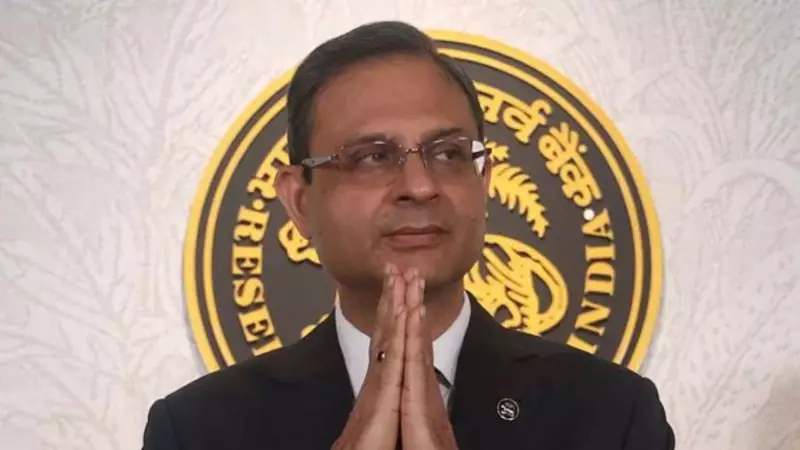
Reserve Bank of India (RBI) Governor Sanjay Malhotra has issued a clarion call for a unified front against the growing threat of digital financial fraud. Addressing the third annual Global Conference of the College of Supervisors on Friday, Malhotra urged all regulated entities, including banks, to collaborate on developing advanced analytics and tools for proactive prevention.
A Collaborative Defence Against Digital Threats
Governor Malhotra emphasized that while individual institutions must continue to strengthen their internal safeguards, the complex nature of digital fraud demands a collective response. "This is an area where we need to collaborate with each other to build analytics and tools to detect mule accounts and suspicious transactions timely and pre-emptively," he stated. Mule accounts, which are bank accounts used by fraudsters to launder illicit funds, represent a significant challenge in the digital ecosystem.
In a significant revelation, Malhotra highlighted a technological advancement in this fight. The Reserve Bank Innovation Hub (RBIH), an RBI subsidiary, has developed an artificial intelligence and machine learning-based model named MuleHunter.AI. This tool is designed to detect and flag potential mule accounts in near real-time, offering a powerful weapon to financial institutions.

Digital Growth Must Come with Consumer Protection
Malhotra acknowledged the dual-edged nature of digital finance. He noted that digital channels are powerful drivers for financial inclusion and customer convenience. However, he warned that without proper guardrails, they can also lead to opaque pricing, weak disclosures, and inappropriate recovery practices.
"The aim should be to ensure that digitalisation and innovations are aligned with fair outcomes for consumers, and a key element of this endeavour should be to protect customers from the menace of rising digital frauds," the Governor asserted. He positioned consumer protection as the non-negotiable foundation of a resilient financial system, stating, "For all of us, protecting customers' interest is not just a priority — it has to become the cornerstone."
Enforcement as a Corrective, Not Punitive, Measure
Clarifying the central bank's regulatory stance, Malhotra explained that the RBI's supervisory and enforcement actions should be viewed as part of a continuous spectrum of oversight tools. He sought to demystify the perception of enforcement, stating that its primary purpose is corrective.
"The purpose of enforcement actions undertaken by the Reserve Bank is generally not punitive. The intent is largely to correct," he said. According to Malhotra, these actions serve a dual purpose: they signal the need for course correction to the entity involved and establish clear standards of conduct for the entire industry.
The scale of regulatory oversight was underscored by recent data. The latest Financial Stability Report (FSR) revealed that between June and November 2025, the RBI took enforcement action against 134 regulated entities. This diverse group included public and private sector banks, cooperative banks, NBFCs, and housing finance companies. The regulator imposed an aggregate penalty of Rs 6.99 crore for non-compliance with statutory provisions and directives.
Governor Malhotra's address marks a strategic shift towards fostering industry-wide cooperation in cybersecurity, positioning collaborative innovation as essential for safeguarding India's rapidly digitizing financial landscape.