Pidilite's Upbeat Growth Trajectory Faces Valuation Hurdles
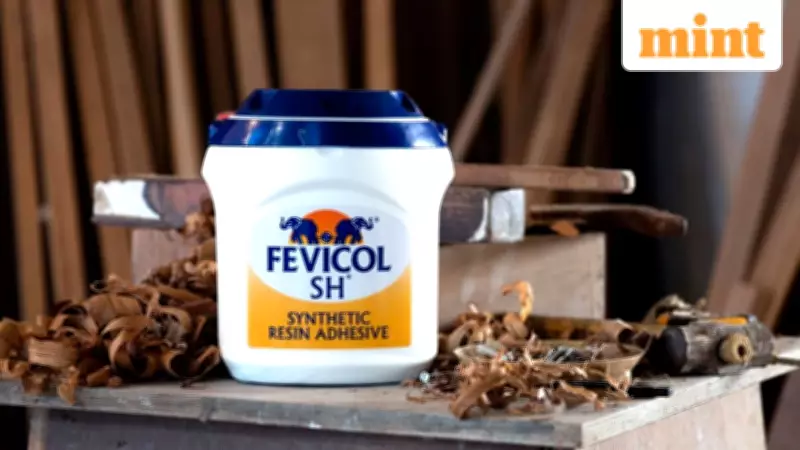
Pidilite Industries Ltd, the renowned manufacturer of Fevicol and other adhesive products, has demonstrated robust performance in the December quarter of FY26, yet its stock faces challenges due to premium valuations. The company's stock currently hovers approximately 7% below its 52-week peak of ₹1,574.95, recorded in September. Following the announcement of solid Q3 results and optimistic management insights, the share price has risen by around 3% over the last two trading sessions, partially narrowing this gap.
Domestic Business Drives Volume Growth
The domestic operations of Pidilite were the primary growth engine during Q3FY26. The combined consumer and bazaar (C&B) and business-to-business (B2B) segments achieved an underlying volume growth (UVG) of about 11%. Within this, the C&B segment led with a 9.7% volume increase, bolstered by premiumization trends. According to an ICICI Securities report dated February 5, Pidilite has consistently delivered volume growth between 7-10% in the C&B segment over the past five quarters, a pattern expected to persist.
In contrast, the B2B segment recorded a lower volume growth of 7.4%. While domestic B2B showed a strong UVG of 15.6%, export volumes in this segment declined sharply by nearly 29%. Management attributed this downturn to challenges in the pigments sector, which has direct exposure to the US market, along with pressure in allied B2B areas such as footwear, leather, and textiles. However, they indicated that the most severe impacts are largely behind, and the company aims to restore B2B growth to at least mid-teen levels.

Positive Outlook and Strategic Initiatives
Pidilite maintains a positive outlook for its products, supported by favorable monsoon conditions and increased infrastructure and urbanization spending outlined in the Union budget. Nonetheless, the company remains cautious of geopolitical risks. It anticipates sustaining double-digit volume growth through pioneer category development and expansion into new segments.
The company's product portfolio is strategically categorized: core products include Fevicol, Fevikwik, Fevistick, and M-Seal; growth categories encompass waterproofing solutions; and pioneer categories involve new ventures like wood finish products and epoxy adhesives. A PL Capital report from February 4 highlighted that Pidilite is well-positioned for sustained growth, driven by continuous innovation, strategic partnerships for technologically advanced products, and a projected 2-4x growth in pioneer and growth categories, which account for 45% of sales.
Margin Performance and Future Guidance
In terms of financial metrics, Pidilite reported a gross margin expansion of 220 basis points year-on-year, reaching an all-time high of 56.5% in Q3FY26, primarily due to benign raw material prices. The cost of key input vinyl acetate monomer (VAM) decreased to approximately $830 per tonne from $884 per tonne a year earlier. Management noted that VAM now constitutes less than 10% of the total raw material basket, reducing the impact of price volatility on gross margins.
Adjusted for one-time effects from changes in labour codes, the Ebitda margin expanded to 25.5% year-on-year. The company guides for margins to remain at the upper end of the 20-24% range. However, significant further margin expansion appears unlikely as Pidilite continues to invest in new categories and brand-building initiatives.
Paints Business and Competitive Landscape
Regarding its paints division, Haisha Paints, management reported gradual scaling with expansion beyond southern markets into eastern India. The company is refining its business model and right-to-win strategy before pursuing aggressive nationwide expansion. Despite Pidilite's strong brand recall and distribution network, investor sentiment has been dampened by concerns over discretionary spending, slower residential real estate sales, and evolving competition in the paints industry.

Valuation Concerns and Market Performance
Over the past year, Pidilite's stock has gained a mere 2%, underperforming the Nifty50 index. A key factor limiting upside potential is its expensive valuation. Based on Bloomberg data, the stock trades at a rich multiple of 55 times estimated earnings for FY27. This premium pricing poses a significant hurdle, even as the company showcases healthy growth prospects and strategic advancements in its operations.