Mutual Funds Explore Expanding Commodity ETFs Beyond Gold and Silver
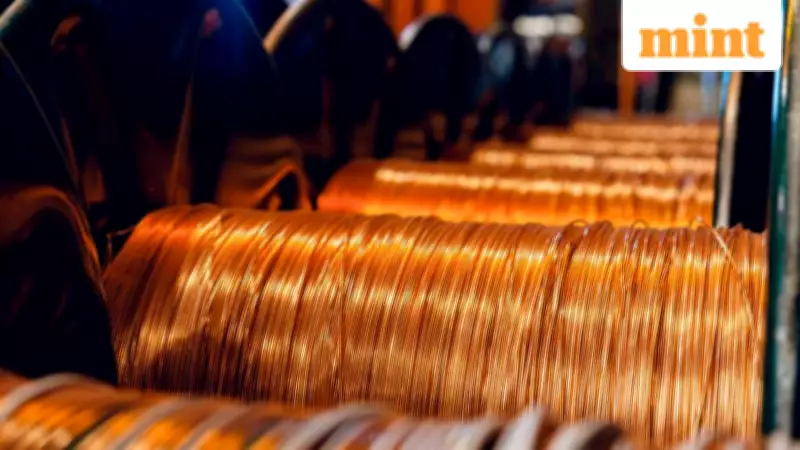
Indian mutual funds and commodity exchanges have initiated preliminary discussions to explore the possibility of expanding exchange-traded funds (ETFs) beyond the current regulatory scope of only gold and silver. According to three sources familiar with the matter, these talks are focusing particularly on industrial metals like copper, but remain at a very early conceptual stage as both sides assess operational feasibility.
Regulatory Framework and Early Discussions
Current Securities and Exchange Board of India (Sebi) regulations strictly limit commodity ETFs to gold and silver, requiring these funds to be fully backed by physical metal holdings. The Association of Mutual Funds of India (AMFI) had previously recommended expanding this framework to include other commodities, but regulatory approval has not yet materialized. "Nothing has been heard on that yet," noted a fourth person with direct knowledge of the matter.
The discussions come amid surging investor interest in precious metal ETFs. In calendar year 2025, gold ETFs witnessed net inflows of ₹42,690 crore, a dramatic increase from ₹11,226 crore the previous year, according to AMFI data. Price performance has been equally remarkable, with gold up 89%, silver 201%, and copper 51% over the past year on the Multi Commodity Exchange (MCX).

Significant Storage and Operational Challenges
Experts highlight substantial practical barriers to expanding commodity ETFs. While gold and silver benefit from high value-to-weight ratios and standardized storage protocols, industrial metals like copper present formidable logistical challenges.
Naveen Mathur, director of commodities, currencies and GIFT IFSC at Anand Rathi Share and Stock Brokers Limited, explained: "Unlike gold and silver, which are fungible, globally standardized, and easy to store and audit, copper is bulky, stored in tonnes, and requires large warehousing capacity. This makes physical storage costly and operationally complex for fund managers."
Agricultural commodities face similar constraints regarding storage capacity and quality variations, further complicating their inclusion in ETF frameworks.
Standardization and Regulatory Hurdles
Anil Ghelani, head of passive investments at DSP Mutual Fund, emphasized the importance of standardization: "For gold and silver, there is a framework with standard bar sizes and clearly defined quality and fineness norms. Mutual funds can only hold such standardized bars, making precious metal ETFs feasible. However, such a framework does not exist for copper, where multiple categories and varying quality make pricing difficult."
The current regulatory requirement for physical backing creates additional complications. Ghelani added that "the prudent regulatory requirement to hold physical commodity to fully back the ETF would make it operationally very difficult to handle movement and storage of large volumes of physical copper."
Alternative Approaches and Market Perspectives
One potential alternative involves using exchange-traded commodity derivatives (ETCDs) instead of physical metal holdings. However, Sebi currently limits derivative exposure to just 30% of total fund size for gold ETFs or multi-asset schemes, preventing 100% derivative-based funds. "Things can be managed by using ETCDs for commodities apart from gold and silver, but only if the regulations permit," commented an unnamed official.
Hemen Bhatia, executive director and CEO at Angel One AMC, provided global context: "Commodity ETFs are still a tiny part of global ETF markets at around 3-4%. Within that, gold and silver account for approximately 85% combined. From an allocation perspective, a third commodity may not add significant value to overall portfolios, but from a tactical perspective, more options could be beneficial."

Market Context and Future Outlook
India's total ETF market was valued at approximately ₹10.9 trillion at the end of December 2025, with gold and silver ETFs constituting about 18% of this total. While mutual funds continue to advocate for expanded commodity ETF options, substantial regulatory, logistical, and standardization hurdles must be overcome before copper or other industrial metals can join gold and silver in Indian ETF offerings.
Emails seeking comments from Sebi, AMFI, and MCX remained unanswered at the time of publication, indicating that formal regulatory movement on this front may still be some distance away.