

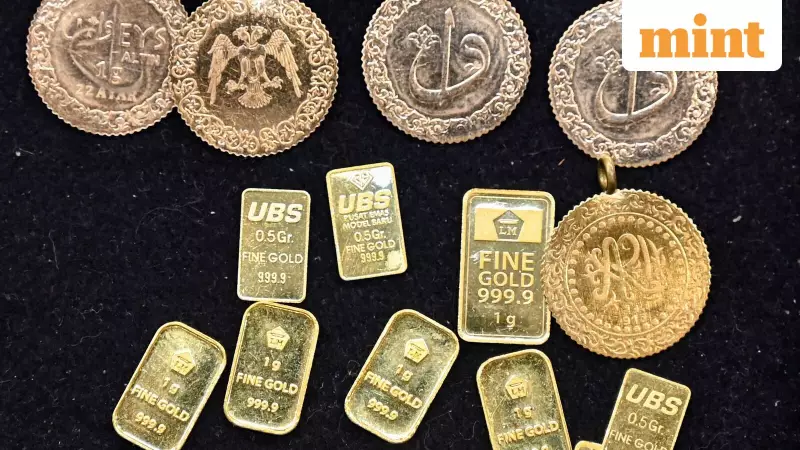
Gold's Spectacular Rally Faces a Reality Check
The gold market has experienced a remarkable run in recent years. Prices soared to unprecedented levels, creating excitement among investors worldwide. However, this impressive rally now shows signs of strain. Since hitting a record high of $4,380 per ounce on October 20th, gold has retreated significantly. It currently hovers around $4,100, causing concern among those who bet heavily on its continued rise.
The Battle Between Bulls and Bears
Market participants often use poker terminology to describe gold trading dynamics. "Strong hands" refer to committed investors who stick with gold regardless of price fluctuations. "Weak hands" describe more fickle traders who exit positions at the first hint of trouble. For months, the strong hands dominated the market, pushing prices steadily upward. Their confidence seemed unshakable.
Now the situation appears less certain. The recent price drop has made bullish investors uncomfortable. Despite the correction, gold remains substantially higher than earlier levels. It sits 54% above its January price and 42% above its previous inflation-adjusted peak from 1980. Analysts offer conflicting predictions about what comes next. Some anticipate a gradual recovery, while others forecast prices breaking through $5,000 next year. Bearish voices argue the decline has only just begun.

Three Competing Explanations for Gold's Movement
Understanding gold's price trajectory requires examining three distinct buyer groups: institutional investors, central banks, and speculators. Each group tells a different story about what drives the market.
Institutional Investors Seeking Safety
Gold traditionally serves as a safe haven during turbulent times. Its physical nature and global liquidity appeal to large portfolio managers. Previous bull markets followed major crises like the dotcom crash, the 2007-09 financial crisis, and the COVID-19 pandemic. This time appears different. Gold has roughly doubled since March 2024 without a corresponding recession. American stocks have performed well during this period, and real interest rates remain elevated.
Perhaps institutional investors anticipate trouble ahead. President Donald Trump's trade policies and tensions with China threaten global commerce. America recently endured its longest government shutdown. Concerns grow that an AI-stock collapse could damage the broader economy. Yet these intermittent shocks don't perfectly align with gold's steady climb. Market reactions to political developments have been muted, and gold has moved somewhat in sync with stocks recently.
Central Banks and Currency Concerns
A second theory suggests central banks drive gold demand. According to this "debasement" narrative, political dysfunction in America, rising public debt, and threats to Federal Reserve independence undermine confidence in the dollar. Central banks worldwide might therefore shift from dollar assets to gold as protection against inflation.
The evidence for this remains unclear. If American securities faced massive selling, the dollar would weaken and long-term yields would increase. Instead, the dollar has stabilized after earlier declines, and 30-year Treasury yields have remained mostly flat. Emerging-market central banks do show interest in gold, but their purchases in volume terms remain modest. Data indicates reported buying has slowed since last year, concentrated among just a few banks. China's unreported imports appear to have peaked before 2025.
Speculators Fueling Momentum
Speculative activity may explain recent price movements most convincingly. Hedge funds held record long positions on gold futures in late September, equivalent to 619 tonnes of metal. Exchange-traded funds also showed strong net purchasing. Last month, ETF flows diminished, and hedge funds engaged in net sales. These actions likely contributed to the late-month price dip, according to analyst Michael Haigh of Société Générale.

ETF flows have since recovered somewhat. This pattern suggests gold prices closely follow these volatile funds' changing appetites. What began as modest central bank reserve adjustments may have evolved into a self-reinforcing cycle of speculative money chasing higher prices. This classic "momentum trade" has now paused. If it reverses direction, committed investors face significant exposure.
The Uncertain Road Ahead
The gold market stands at a crossroads. Prices remain elevated by historical standards, but the relentless upward momentum has broken. Different buyer groups offer competing narratives about what comes next. Institutional investors may see gold as insurance against future crises. Central banks could continue diversifying reserves, albeit cautiously. Speculators will likely respond to short-term price signals.
Market participants watch closely for clues about which story will prevail. The strong hands have substantial chips on the table. Their next moves will determine whether gold resumes its climb or enters a more sustained correction. For now, the dazzling rally shows cracks, reminding everyone that even the shiniest assets face periods of uncertainty.





