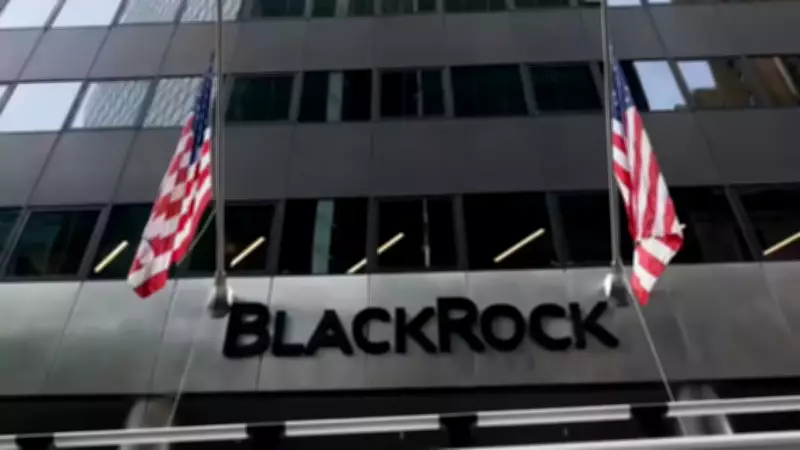
BlackRock Imposes Withdrawal Limits on $26 Billion Private Credit Fund
BlackRock, the world's largest asset manager, has restricted investor withdrawals from its $26 billion HPS Corporate Lending Fund (HLEND) after redemption requests surged beyond normal thresholds. This move underscores mounting pressure in the $2 trillion global private credit market, as reported by Reuters.
Redemption Requests Surge, Triggering Limits
The restriction was implemented after investors sought to withdraw $1.2 billion in the first quarter, equivalent to approximately 9.3% of the fund's net asset value. In response, the fund distributed $620 million during the quarterly redemption cycle, reaching the 5% limit that allows fund managers to restrict further withdrawals under its structure.
This development reflects growing investor caution toward private credit funds, which invest in loans to companies that cannot be quickly sold if redemption requests spike. "It should serve as a warning sign for the industry and the rulemakers about the downside of illiquid funds for retail investors," said Greggory Warren, senior stock analyst at Morningstar.

Market Pressure and Broader Context
Market pressures have also impacted BlackRock's stock performance. Shares of the asset manager fell 6.7% on the New York Stock Exchange, amid a broader selloff triggered by weaker-than-expected US jobs data and escalating tensions in the Middle East involving the US, Israel, and Iran.
HLEND, structured as a business development company (BDC), was acquired by BlackRock along with its manager HPS Investment Partners in a $12 billion expansion into private credit in 2024. BDCs primarily raise money from retail investors and lend it to mid-sized companies, but these loans are typically illiquid, creating challenges during large redemption requests.
The fund stated that the redemption cap helps prevent "a structural mismatch between investor capital and the expected duration of the private credit loans in which HLEND invests." Warren added, "By preventing redemptions through gates, fund managers can avoid being forced sellers of assets, which would negatively impact investment returns for the remaining fund investors, given the opacity and illiquidity of the holdings in these funds."
Sector-Wide Liquidity Pressures
Investor pressure is being observed across the private credit sector. Earlier this week, Blackstone raised the redemption limit on one of its $82 billion funds to 7% from the usual 5%, while the firm and its employees injected $400 million to meet withdrawal requests. Similarly, Blue Owl repurchased 15.4% of one of its funds in January, indicating broader liquidity strains.
Loan Quality and Portfolio Concerns
Concerns about lending quality have intensified following recent bankruptcies, including those of a US auto parts supplier and a subprime auto lender last year, along with the collapse of a UK mortgage lender last week. HLEND emphasized that its lending portfolio focuses on mature private companies with stable cash flows, with loan structures designed to ensure repayment priority in bankruptcy scenarios.
Company documents reveal that approximately 19% of the fund's portfolio is exposed to the software sector, which has faced aggressive selling as investors worry about disruption from AI-driven startups. Despite these challenges, subscriptions to the fund reached $840 million in the first quarter, though this fell short of the $1.2 billion requested for withdrawals.
Investor Shift Amid Volatility
Amid heightened volatility linked to Middle East tensions, potential economic slowdown, and rising loan defaults, investors are increasingly shifting toward safer assets. HPS noted in a statement that it sees an opportunity to leverage the current volatility, according to Reuters.
This situation highlights the delicate balance in the private credit market, where illiquid assets and investor demand for liquidity can clash, prompting fund managers to implement protective measures to safeguard long-term returns.