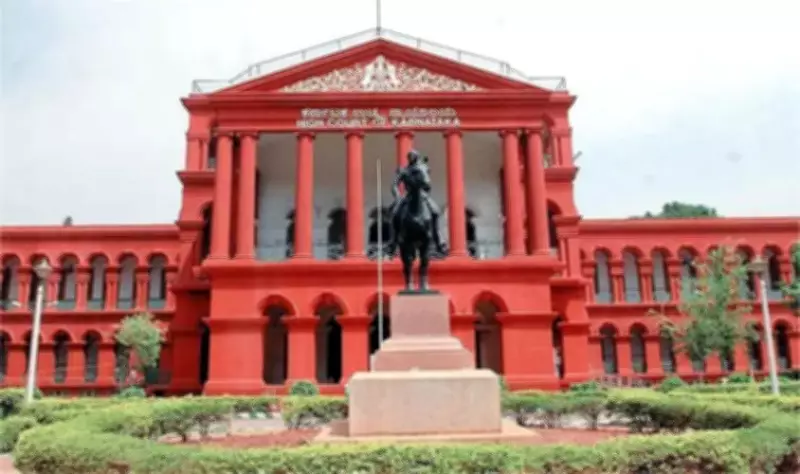
The Bangalore Development Authority (BDA) has filed a writ petition before the Karnataka high court, with the filing dated April 27 and registered on April 29, seeking clarity on the applicability of the Real Estate (Regulation and Development) Act, 2016 (Rera), to its residential layouts and schemes.
Petition Details and Respondents
The petition has named the Union of India, the Karnataka government, and the Karnataka Real Estate Regulatory Authority (K-Rera) as respondents. The BDA has contended that it does not fall within the definition of a 'promoter' under Section 2(ZK) of the Act and therefore should not come under the jurisdiction of K-Rera.
Key Legal Contentions
The BDA also sought a declaration that Rera provisions should not be applicable to layouts where preliminary acquisition notifications were issued prior to May 1, 2017 — the date on which the Act came into force. Additionally, the authority has sought interim relief to stay Rera's applicability to such projects until the matter is adjudicated.

Explaining the rationale behind the move, BDA officials told TOI that the authority's position is rooted in its distinct role as a public planning body. 'BDA is not a real estate developer. We primarily create layouts to provide affordable housing for middle- and lower middle-income groups. If we stop doing this, illegal and unplanned layouts will mushroom across Bengaluru,' an official said, stressing that most planned layouts in the city have historically been developed by the authority. The officials also underlined that BDA operates under a statutory framework of land acquisition through a legal process, unlike private developers.
Retrospective Application Concerns
A key contention raised in the petition is against the retrospective application of the law. 'Applying Rera to projects planned and notified before May 1, 2017, is not just impractical but also unfair and unjust. When these layouts were conceived — for instance, projects from around 2012 — there was no such law in place. Buyers entered into agreements knowing this. Imposing penalties now would mean burdening public funds, which is not justified,' the official added.
Financial Implications and Transparency
The authority has also argued that any financial impact of Rera ultimately falls on public resources. It added that it functions transparently under the law, with revenues reinvested into the city. Calling for a collaborative approach, the official said BDA is open to engaging with Rera to evolve a mechanism in public interest. Officials added that once interim relief is obtained from the high court, the authority would be open to structured discussions with Rera, and even a formal framework or agreement could be worked out to govern future projects.
Background: Resident Complaints
In a previous TOI report, residents of Nadaprabhu Kempegowda Layout (NPKL) flagged long-pending development works, alleging delays of over a decade. Citing provisions of the Rera Act, 2016, they argued that the BDA qualifies as a 'promoter' and is liable under K-Rera norms. More than 20 residents approached the authority, with several securing compensation orders for the delays.