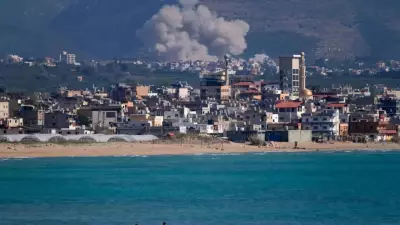
In a dramatic escalation of hostilities, Iran launched missile and drone strikes on Kuwait and Bahrain on Tuesday, hours after the United States conducted fresh airstrikes on Iran's Qeshm Island. The attacks mark a significant expansion of the conflict beyond Iran's borders, threatening to draw more nations into the confrontation.
Fresh US Strikes on Qeshm Island
The United States carried out a series of airstrikes on Qeshm Island, a strategic Iranian territory in the Persian Gulf, targeting military installations linked to the Islamic Revolutionary Guard Corps (IRGC). Pentagon officials said the strikes were in response to recent Iranian provocations against US forces in the region. The strikes destroyed several missile batteries and command centers.
Iran's Retaliation
In retaliation, Iran launched a barrage of ballistic missiles and drones toward Kuwait and Bahrain, both of which host US military bases. Iranian state media confirmed the attacks, describing them as a response to "American aggression." Kuwaiti and Bahraini air defense systems intercepted several projectiles, but debris caused minor injuries and property damage.

The Iranian leadership, including Supreme Leader Ayatollah Ali Khamenei's son Mojtaba, has been vocal in supporting the IRGC's actions. Mojtaba Khamenei, considered a potential successor, stated that Iran will not back down in the face of US aggression.
Impact on Peace Talks
The strikes come amid ongoing peace negotiations mediated by Qatar and Oman. Analysts warn that the latest violence could derail diplomatic efforts. US President Donald Trump, who authorized the strikes, reiterated that the US seeks peace but will not tolerate Iranian threats. "We are ready to defend our allies and interests," Trump said in a statement.
Iran's Foreign Minister condemned the US strikes as a violation of international law and warned of further retaliation. The situation remains volatile, with both sides signaling readiness for continued confrontation.
Regional Reactions
Kuwait and Bahrain have condemned the Iranian attacks and called for an emergency meeting of the Gulf Cooperation Council. Saudi Arabia and the United Arab Emirates have expressed solidarity with the affected nations. Meanwhile, the United Nations has urged restraint and called for an immediate ceasefire.
The conflict has raised concerns about a broader regional war, with Iran's proxies in Yemen, Syria, and Iraq also on high alert. As the world watches, the fragile peace talks hang in the balance.