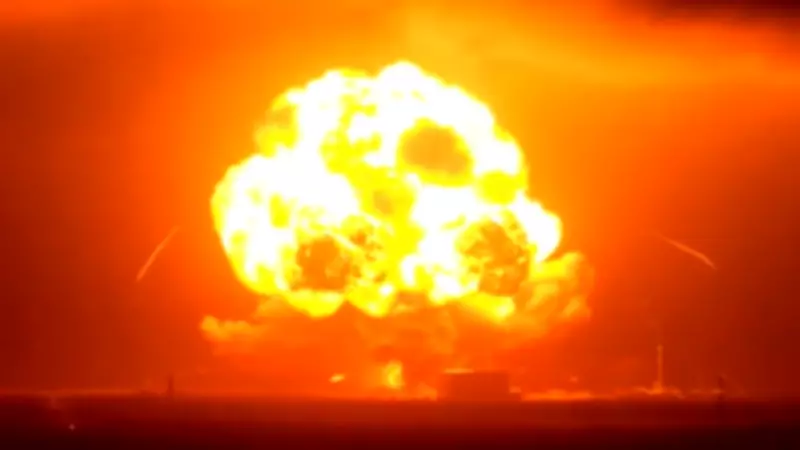
One of the largest rocket explosions in U.S. history illuminated the Florida night sky on May 28, 2026, after a Blue Origin New Glenn rocket suffered a catastrophic failure during a routine pre-launch static fire test. The incident occurred at Space Launch Complex 36 at Cape Canaveral, the only launch pad equipped to handle New Glenn rockets.
What Happened
Around 9 p.m. ET, the rocket exploded during a static fire test, where engines are ignited while the vehicle remains secured to the launch pad. The rocket was being prepared for its fourth mission, scheduled as early as June 4 to launch 48 Amazon internet satellites. No payload was aboard during the test. The explosion shook homes in nearby Cape Canaveral and Cocoa Beach, prompting residents to flood social media with questions. Blue Origin confirmed the anomaly, stating that all personnel were accounted for.
Scale of Damage
The blast destroyed the rocket and severely damaged Launch Complex 36. The extent of damage to ground equipment remains unclear. Images captured after the explosion show only fire, smoke, and silence where a 320-foot rocket once stood. This marks a significant setback for Blue Origin, which had only recently been cleared to return to flight after a previous anomaly.

Previous Troubles
New Glenn's third mission ended with a cryogenic failure in the upper stage, causing the loss of a satellite. The rocket was grounded by the FAA following that April anomaly and was only cleared on May 22 to resume flights. The latest explosion raises new questions about the rocket's reliability.
Impact on NASA's Moon Plans
Just a day before the explosion, NASA awarded Blue Origin a $188 million contract to help build a moon base. New Glenn is central to both Blue Origin's and NASA's lunar ambitions, and the explosion is likely to cause significant delays. NASA Administrator Jared Isaacman called spaceflight "unforgiving" and said the agency would work with partners to investigate the anomaly and assess near-term mission impacts.
Jeff Bezos' Response
Jeff Bezos posted on X: "It's too early to know the root cause but we're already working to find it. Very rough day, but we'll rebuild whatever needs rebuilding and get back to flying. It's worth it."
What Happens Next
An FAA investigation is expected, and the timeline for Amazon's LEO satellite launches is now uncertain. Blue Origin will need to assess damage to the launch pad and determine the root cause of the explosion before resuming flights.
This incident underscores the challenges of space exploration and the high stakes involved in developing reusable rocket technology. As Blue Origin works to recover, the broader space industry watches closely, recognizing that setbacks like these are part of the journey toward making space more accessible.