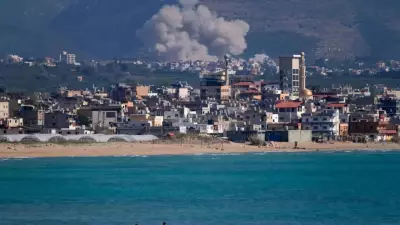
Israel announced on Sunday that it intercepted two projectiles that crossed from Lebanon, as tensions remain high along the border. The Israeli military stated that the projectiles were detected and intercepted by air defense systems, with no casualties reported.
Ceasefire Conditions
This incident comes amid reports that Iran has made a ceasefire in Lebanon between its close ally, Hezbollah, and Israel a condition for any peace deal with the United States. According to sources familiar with the matter, Tehran is leveraging its influence to push for a halt to hostilities as part of broader negotiations.
Regional Implications
The development underscores the complex dynamics in the Middle East, where Iran's involvement in Lebanon and its support for Hezbollah remain key factors. Analysts suggest that any ceasefire could pave the way for de-escalation but also highlight the challenges in achieving lasting peace.

Hezbollah, a Shia militant group and political party, has been a longstanding adversary of Israel. The group has engaged in multiple conflicts with Israel, most recently in 2006. Iran's condition links the fate of Lebanon's stability to broader US-Iran negotiations.
The United States has not officially commented on Iran's demand, but diplomatic channels remain active. The interception of projectiles from Lebanon could complicate efforts to establish a ceasefire, as both sides continue to exchange fire sporadically.
Israel has maintained a policy of striking back against any aggression from Lebanon, often targeting Hezbollah positions. The international community has called for restraint, urging all parties to avoid escalation that could destabilize the region further.