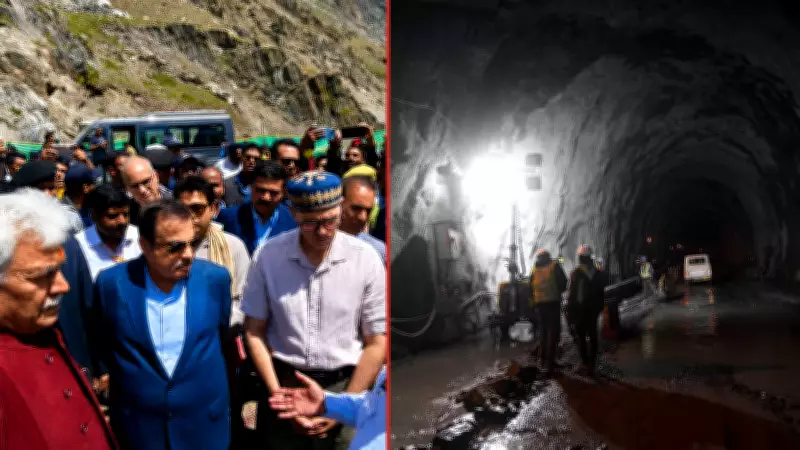
The Zojila Tunnel project has achieved a major milestone with the breakthrough ceremony marking the excavation of the final rock wall. Union Minister Nitin Gadkari, Jammu and Kashmir Lieutenant Governor Manoj Sinha, and Chief Minister Omar Abdullah attended the event, celebrating the completion of tunneling work for the 13.15-kilometer-long tunnel.
Significance of the Zojila Tunnel
Once operational, the Zojila Tunnel will provide year-round connectivity between Kashmir and Ladakh, currently severed during winter due to heavy snowfall. It is expected to become Asia's longest bi-directional road tunnel, significantly reducing travel time and enhancing logistics and strategic connectivity in the Himalayan region.
Key Benefits
- Year-Round Connectivity: The tunnel will ensure uninterrupted access to Ladakh, crucial for residents, tourists, and military logistics.
- Travel Time Reduction: The journey through Zojila Pass, which takes hours under hazardous conditions, will be cut to about 20 minutes.
- Strategic Importance: The tunnel strengthens India's infrastructure near sensitive borders, improving defense mobility.
Project Details
The Zojila Tunnel is being constructed at an altitude of about 11,578 feet and involves challenging geological conditions. The breakthrough marks the end of the excavation phase, with remaining work on lining, ventilation, lighting, and safety systems expected to be completed soon. Officials stated that the project will boost tourism, trade, and economic development in the region.

The ceremony highlighted the government's commitment to infrastructure development in challenging terrains, with Gadkari praising the engineers and workers for their dedication. The tunnel is part of a larger plan to improve connectivity in Jammu and Kashmir and Ladakh.