When British archaeologist Leonard Woolley began excavating the ancient Mesopotamian city of Ur in the late 1920s, his work went far beyond unearthing old graves. His team uncovered a massive royal burial ground that fundamentally changed both public and scholarly perceptions of early urban civilization. Before this groundbreaking discovery, many believed the world’s first cities were crude and primitive settlements. However, the exquisite treasures and complex burial rituals of Ur proved that the early city was spectacular, wealthy, and incredibly sophisticated.
A Giant Graveyard of the Elite
The discovery at Ur attracted major scientific attention due to its immense scale. The University of Chicago’s Institute for the Study of Ancient Cultures reported that Woolley’s team found approximately 1,850 burials in the region. This was not a single tomb but a vast cemetery containing exceptionally rich graves, including a special area reserved for the top stratum of society. During the excavations, they uncovered deep pits, some tombs with built chambers, access ramps, and wheeled carts. Many tombs contained attendants buried alongside elites; some scholars interpret these as sacrificial victims, while others see evidence for ritual retainer burials. The planned layout of this necropolis allowed historians to examine how social hierarchy and elite rituals functioned in early Mesopotamia, revealing a society that approached death with careful ritual display.
The Spectacular Tomb of Queen Pu-abi
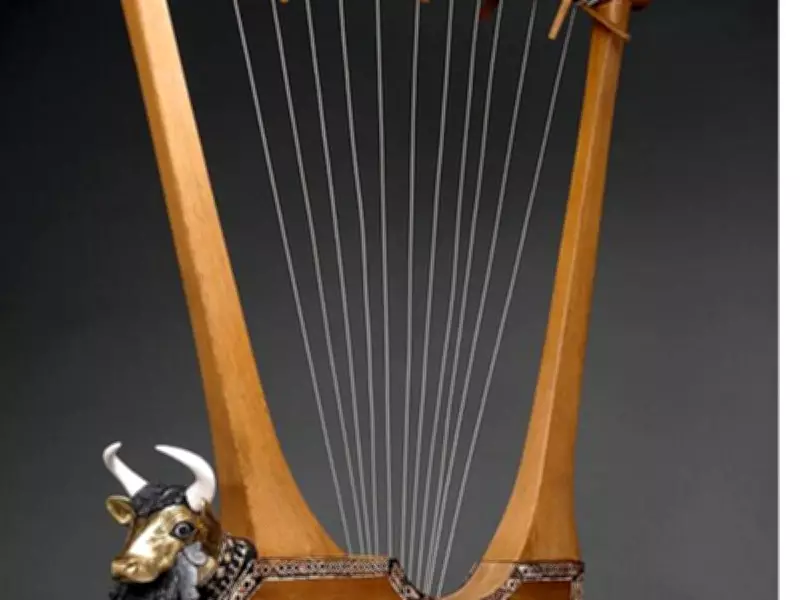
The Royal Cemetery gained particular fame when Woolley discovered inscribed cylinder seals linking some tombs to named individuals. The finding of cylinder seals naming elite individuals at the site provides strong evidence of a court-like world in which rank and service were deeply embedded. Among these, the burial of Queen Puabi was the ultimate signature find of the entire excavation. The McClung Museum of Natural History and Culture describes Queen Puabi’s tomb as an incredible blend of context and unique treasures. One of the most notable discoveries from the cemetery was the famous lyres, beautifully reconstructed, with its original gold-and-lapis-lazuli bull’s head. This remarkable combination of a named historical individual and such remarkably preserved treasure gave the public an immediate and unforgettable glimpse into the ritual and identity of an early city-state.

Wealth and Symbolism
The artefacts found at Ur were valuable not only for their raw materials but also because they were masterpieces of craftsmanship. The graves produced magnificent finds, including elaborate jewellery of Queen Puabi, the famous Standard of Ur, and a delicate sculpture called the Ram Caught in a Thicket. The musical instruments and ornaments were made of a striking combination of wood, silver, gold, carnelian, and vivid blue lapis lazuli. The careful blend of colours and materials showed that the rulers of Ur did not display their wealth in a careless or blunt manner. Instead, they used rare materials and ritual objects to display status, utilizing these rare imported materials. The dead were buried with beautiful objects that announced immense power, high technical skill, and established control over long-distance trade routes.

Rewriting the History of Civilisation
The treasures of Ur significantly changed public and scholarly views of early Mesopotamian civilization. The cemetery, which is 4,500 years old, captured public and scholarly attention, quickly changing the way the public perceived the ancient Near East from primitive to extremely sophisticated, according to Penn Today. The find showed that early Mesopotamia had powerful institutions, advanced craftsmanship, and a deep taste for grand public display. The cemetery remains a key dataset for researchers studying early urban economies. This ongoing research is further explored in a peer-reviewed study published by the National Institutes of Health, which analyses animal remains from specific royal burial contexts such as PG 789 and PG 800 to better understand ancient livestock and ritual practices. A PLOS ONE study details how the site remains a benchmark for history through this scientific continuity. Ultimately, Leonard Woolley’s work at Ur was not merely about putting beautiful objects into museum collections. It told a clear, legible story of ancient life that turned buried things into evidence for power, ritual, and social life.