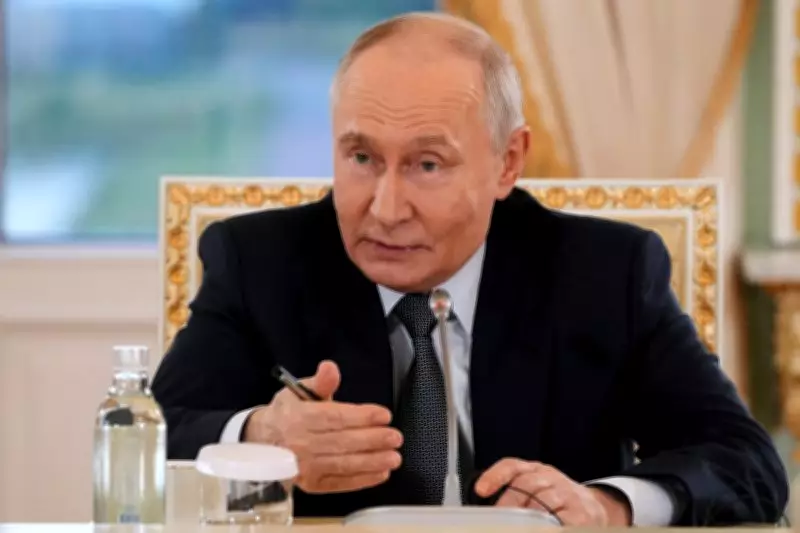
Russian President Vladimir Putin parried a question about his plans to remain in office until 2036, stating that it was too early to discuss the matter and that only God knew whether he would remain healthy until the end of his current presidential term.
Putin's Remarks to Global Media
The 73-year-old leader, who has been in power since 1999, made the remarks on Thursday during an interaction with heads of leading global news agencies, including PTI. "I don't think about the next polls. Only God knows whether I'll have enough health. Whether I, you and all who gathered here will have the health to live until tomorrow, the day after tomorrow, or even more so to solve some of the tasks that we're faced with and to achieve the goals that we're setting," Putin said when asked if he would serve until 2036.
Constitutional Provisions
Putin, who was re-elected President for a six-year term in 2024, noted that the Russian constitution permits him to contest again in the next election scheduled for 2030. "According to the Constitution, I may get re-elected until 2036. But it is too early, too premature to talk about that. I'm perfectly honest. I am not even thinking about that. I'm being perfectly honest with you," he added.

Putin's Political Career
Putin served as the Prime Minister of Russia from 1999 to 2000. He was elected President in 2000 for a four-year term and again in 2004. He then served as Prime Minister from 2008 to 2012. In 2008, the President's term of office was extended to six years. Putin was elected President in 2012 and has been serving since then. His current term runs until 2030, and if he chooses to run and win in 2030, he could potentially remain in office until 2036.
The Russian leader's comments come amid ongoing speculation about his long-term political future. While he has not explicitly ruled out extending his tenure, he has consistently deflected questions about the possibility. This latest interaction with the media reinforces his stance that the focus should remain on current tasks and goals rather than future electoral plans.
Putin's health has also been a topic of discussion, with some observers questioning his ability to continue leading the country given his age. However, the President dismissed such concerns, emphasizing that only God knows the state of his health and that of others. He reiterated that he is not preoccupied with the next elections and is instead concentrating on the challenges facing Russia.
The constitutional amendment that reset Putin's term limits was approved in a nationwide vote in 2020, allowing him to seek two more six-year terms after his current term ends. This effectively means Putin could stay in power until 2036 if he chooses to run and is re-elected. However, the President has not yet indicated whether he will exercise that option.
Political analysts suggest that Putin's evasive response is typical of his leadership style, where he avoids making definitive statements about his long-term plans. This approach keeps both domestic and international observers guessing about Russia's political trajectory. Meanwhile, the Kremlin continues to focus on its strategic objectives, including the ongoing conflict in Ukraine and efforts to bolster the Russian economy amid Western sanctions.