A decades-old land gift in Texas has erupted into a bitter legal and community dispute as land intended for future parkland became the subject of a data-center controversy. At issue is nearly 88 acres in Taylor, northeast of Austin, which was donated in 1999 for $1 to create public parkland and later sold for $10 million to data-center developer Blueprint for a proposed data center.
The Original Gift
According to reports, farmer Charles Bland deeded nearly 88 acres to the Texas Parks and Recreation Foundation on July 7, 1999, for $1. The deed reportedly stated that the land was to "be held in trust for future use as parkland." Residents recall that Bland wanted children in the area to have a place to play outside, as he was worried that families on the block did not have enough play space available to them.
Over the next decade, the land ownership changed hands several times. It moved from the Texas Parks and Recreation Foundation to the Williamson County Park Foundation, then back to the City of Taylor shortly after, before being sold for $15,000 to the Taylor Economic Development Corporation (TEDC).

The most significant transaction came in 2025, when TEDC sold the land to Blueprint for approximately $10 million.
Why the Data Center?
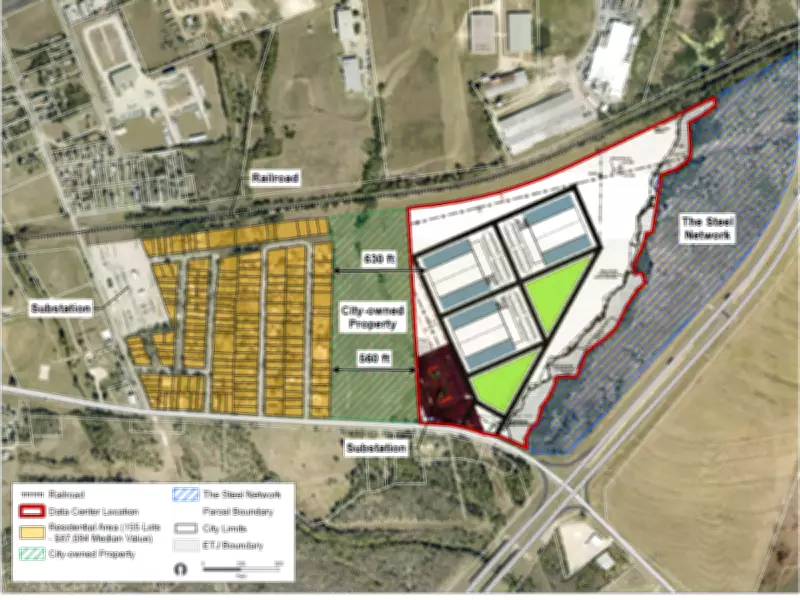
The proposed project calls for a roughly 135,000 sq ft data center, based on local documents and Tom's Hardware reporting. Supporters of the development, such as the City of Taylor, insist that it could be an economic boon, projecting $30 million in tax revenue over the next decade, a considerable chunk to go toward local schools. Local government officials also assert that the property's current employment-center zoning makes blocking a number of potential businesses difficult. Local documents argue that property within employment centers may be subject to some limitations on the types of businesses allowed.
The Public Reacts
The economic arguments are not enough to satisfy all concerned. Residents near the site have expressed concerns ranging from power usage, water consumption, noise pollution, and environmental impact of the facility, to what large industrial sites can do to a community. This argument mirrors concerns emerging across the United States as AI and cloud computing have fueled a surge in data center demand. Electricity usage from data centers is expected to rise dramatically worldwide in the coming years due to the growing adoption of AI technology. Researchers say modern data centers can demand significant resources.
Developers of the Taylor project say that the impact from power, water use, and noise can be mitigated by the proposed use of buffers, noise barriers, closed-loop systems, and dedicated substations.
The Battle Continues
For opponents of the project, the dispute extends beyond concerns about a data center. The core issue is whether a deed donation made to a charitable organization for park use should remain legally binding some 25 years later, even with an offer of $10 million for potential new construction. Lawsuits have been filed, but court decisions thus far have leaned towards the developer, and residents are currently appealing those decisions.
The case in Taylor is far from over and has implications far beyond one Texas community, as governments worldwide compete for technology investment and jobs. For Taylor residents, however, the issue is simpler: if land is gifted to a community for the purpose of public parks, should subsequent owners still abide by that intention decades later?