A federal judge in Massachusetts has struck down President Donald Trump's controversial $100,000 fee on new H-1B visas, ruling that the administration lacked the legal authority to impose what the court described as an unauthorised tax on employers seeking to hire highly skilled foreign workers.
Court ruling details
US District Judge Leo Sorokin concluded that the fee, announced by Trump in September 2025, went far beyond the fees authorised by Congress under federal immigration law. The ruling marks one of the most significant judicial setbacks for Trump's efforts to sharply restrict legal immigration through executive action.
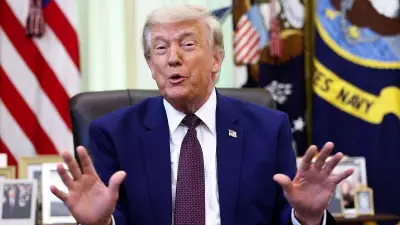
Trump had imposed the fee via a presidential proclamation requiring employers to pay $100,000 for certain new H-1B workers recruited from abroad. Before the change, employers typically paid between $2,000 and $5,000 in government filing fees, depending on the petition type. The administration argued the measure would discourage abuse of the H-1B program and protect American workers from foreign competition.

Legal challenge by states
A coalition of 20 Democratic state attorneys general challenged the policy in federal court, arguing that the president had effectively created a new tax without congressional approval and had exceeded his authority under the Immigration and Nationality Act. The states contended that the massive increase would deter employers from sponsoring highly skilled foreign workers and harm state economies, universities, hospitals, and technology industries that rely heavily on H-1B talent.
In his opinion, Sorokin agreed with the states. "Here, the substance and application of the $100,000 payment reveal that it is a tax, regardless of what the payment is called," the judge wrote, concluding that Congress alone has the power to impose such a levy.
Impact on H-1B program
The H-1B program allows US employers to hire foreign professionals in speciality occupations requiring at least a bachelor's degree. Each year, 65,000 regular H-1B visas are available, along with an additional 20,000 visas reserved for holders of advanced US degrees. Indian professionals account for the overwhelming majority — almost 70 per cent — of H-1B beneficiaries, making the fee a matter of intense concern in India's technology sector.
The fee was one of the most aggressive restrictions imposed by the Trump administration on employment-based immigration. Business groups warned it would make the program prohibitively expensive for universities, hospitals, startups, and smaller employers. Bloomberg and court filings showed that only a tiny number of employers ultimately paid the fee after it took effect, suggesting it had dramatically reduced demand for new H-1B petitions. As of mid-February, the government had received only 85 payments.
Legal split and next steps
The ruling also deepens a legal split over the policy. In a separate lawsuit brought by the US Chamber of Commerce and other business groups, a federal judge in Washington had previously upheld the fee, finding that Trump possessed broad authority under immigration law to restrict the entry of foreign nationals. That decision is currently on appeal.
What happens next is likely to be determined by higher courts. The Trump administration can appeal Sorokin's ruling to the US Court of Appeals for the First Circuit and seek a stay allowing the fee to remain in effect while litigation continues. Immigration lawyers expect the administration to pursue further review given the policy's importance to Trump's broader immigration agenda.
For now, however, the decision effectively invalidates the fee nationwide and removes a major obstacle for employers seeking to hire foreign professionals under the H-1B program. For the technology industry, universities, and thousands of prospective foreign workers, it represents a significant victory in the ongoing legal battle over the future of high-skilled immigration to the United States.