Renewed Violence Grips Pakistan-Occupied Kashmir
Tensions remained high across Pakistan-occupied Kashmir (PoK) on Tuesday, following a day of violent clashes between Pakistani security forces and anti-government protesters that left at least 11 people dead and dozens injured. The unrest, which erupted on Monday, has spread to several towns, including Barnala, Bhimber, Mirpur, and Kotli, with protesters demanding an end to Islamabad's policies in the region.
Protests and Crackdown Intensify
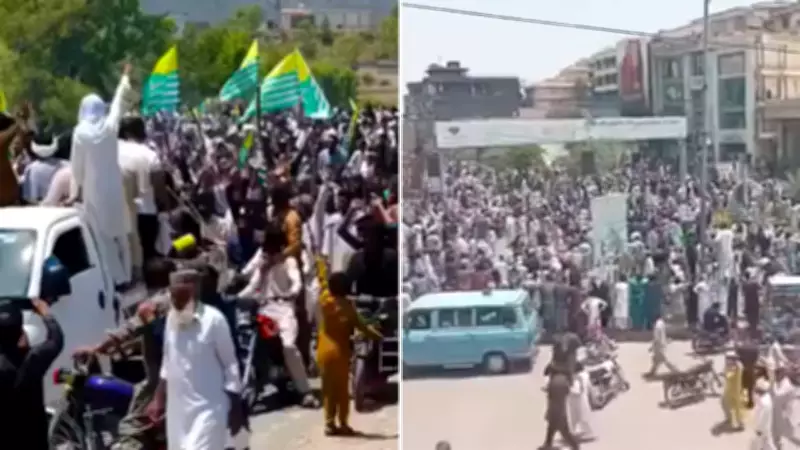
Videos circulating on social media showed large crowds gathering in Barnala, Bhimber, and Mirpur, while security personnel fired tear gas shells at protesters in Muzaffarabad. Other footage depicted markets shut across the city as tensions escalated following clashes between workers of the Joint Awami Action Committee (JAAC) and Pakistani security forces. The JAAC, a coalition of political and civil society groups, has been leading the protests against what they describe as repressive measures by authorities.
Demonstrators have accused the Pakistani government of suppressing dissent, imposing restrictions on communications, and arresting activists. Reports from the area suggest a near-total communications blackout, with mobile and internet services suspended in several districts. The crackdown has also led to the arrest of numerous protesters, including some British nationals, according to local sources.

International Reaction
The unrest has drawn significant international attention. More than 50 members of the British Parliament have written to UK Home Secretary and Foreign Secretary officials, expressing deep concern over reports of a lockdown, arrests, and a communications blackout in PoK. In a statement, Bradford East MP Imran Hussain said, "As Chair of the APPG on Kashmir, our letter to the Foreign Secretary now has the support of over 50 Parliamentarians. We remain deeply concerned by reports of a continued lockdown, a communications blackout, arrests and escalating tensions."
Hussain urged the UK government to "use all appropriate diplomatic channels to support de-escalation, the immediate lifting of the blockade, restoration of communications and a peaceful resolution through table talks that respect the human rights of Kashmiris at the heart of it." In their letter, the parliamentarians noted that they had been contacted by numerous British Kashmiris who were unable to establish contact with relatives in PoK. They also raised concerns over reports of arrests, including those of British nationals, and what they described as a breakdown in dialogue between authorities and representatives of the JAAC.
The situation remains fluid, with no immediate signs of de-escalation. The international community continues to monitor developments closely, urging restraint and dialogue to resolve the crisis.