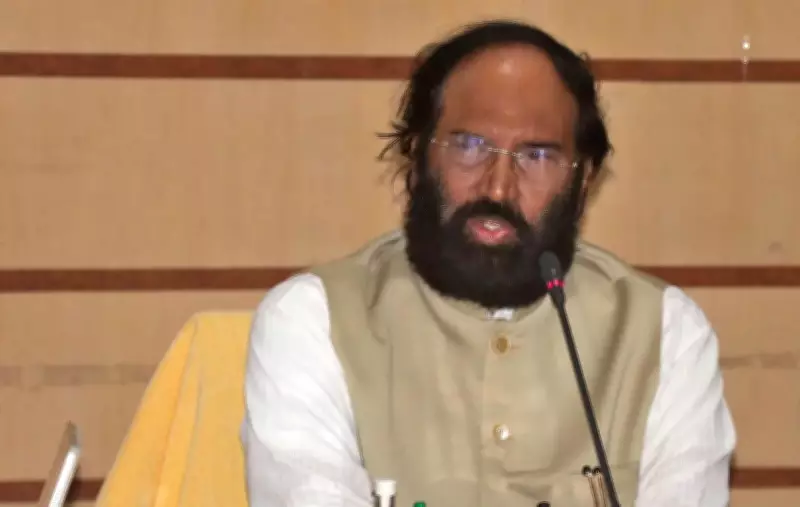
Hyderabad: Telangana irrigation minister N. Uttam Kumar Reddy has directed irrigation officials to identify and utilize available irrigation lands, reservoirs, and canal systems for solar power generation on a priority basis. The government is currently spending heavily on power for irrigation projects and lift schemes, and the minister emphasized the need to explore alternative energy sources.
Exploring Solar and Pumped Storage Projects
During a review of irrigation power requirements at Jala Soudha with senior officials, the minister stated that the department should move beyond routine project execution and actively create its own power sources. He specifically mentioned that locations such as Manjeera and Singur projects could be explored for solar power generation. The department must explore solar and pumped storage projects wherever possible to reduce long-term power costs and create sustainable energy sources.
Feasibility Studies and Capacity Potential
Feasibility studies have been conducted at approximately 16 reservoirs. According to the minister, even if only about 10 percent of suitable reservoir and irrigation land area is utilized, it could create the potential to install nearly 6,000 to 7,000 megawatts (MW) of solar power capacity. He urged the department to work on this proposal and coordinate with concerned chief engineers and nodal agencies to prepare a clear way forward.

Canal-Based Solar Project Under BOOT Model
A canal-based solar project under the Build Own Operate and Transfer (BOOT) model was also presented during the review. The project is proposed on a canal stretch of about 15 kilometers between Jagora and Chandora. The minister highlighted that this model would not require government capital investment or land acquisition, as the existing canal system would be utilized.
The project could support a 20 MW solar power system, generating approximately 340 lakh units annually. It would meet the project's own requirement of about 84 lakh units, with the surplus energy of around 255 lakh units being sold to generate revenue. The estimated revenue from surplus energy sales is nearly Rs 11.5 crore per year.
Financial and Environmental Benefits
The model also projects annual power savings of about Rs 6.2 crore, amounting to nearly Rs 155 crore over 25 years. Beyond financial gains, the project would provide assured power and water support for around 8,000 acres of agricultural land. Environmental benefits include renewable energy generation, canal cooling, and reduced evaporation.
The minister reiterated that solar projects on all available irrigation land should be the first priority, with other revenue sources to be taken up later. He emphasized the need for the department to act swiftly to reduce power costs and promote sustainable energy.