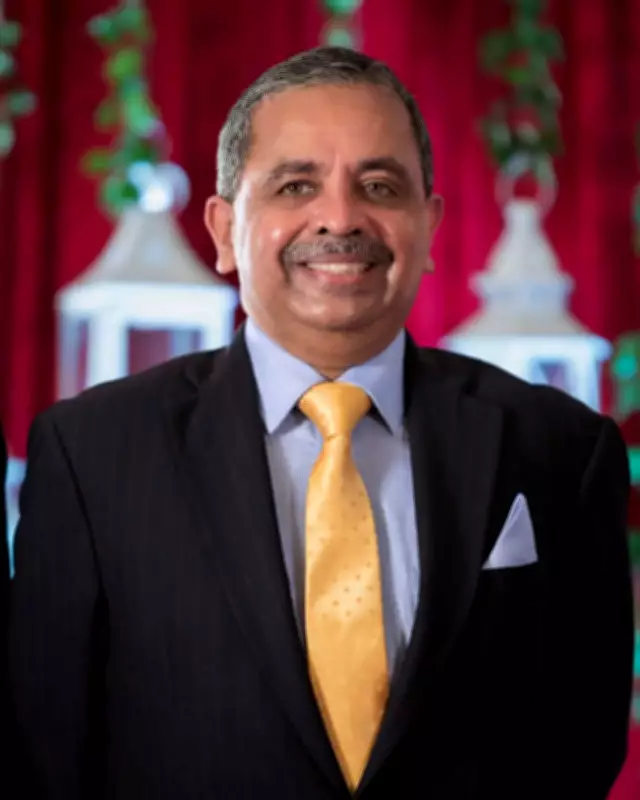
After initial success in deep-tech incubation, IIT Madras has set its sights on global expansion to support startups in entering new markets, securing funding, and forming corporate partnerships. In an interview, Thirumalai Madhavnarayan, chief executive and director of IIT-M Global (IIT Madras Global Research Foundation), revealed that they are opening centres in five markets, including the US, UAE, and UK, starting with around 50 curated deep-tech startups. They are seeing traction in commercialising the institute’s intellectual property (IP), with interest across energy, marine, and space sectors.
What Does IIT-M Global Do?
IIT-M Global takes IIT Madras’s research and innovation ecosystem to global markets in a scalable way without building large overseas campuses. The four pillars of its global strategy are growth-stage deep-tech startups from IIT-M’s ecosystem, sponsored research and consultancy, intellectual property, and interdisciplinary, globally relevant academic programmes.
Why International Centres?
The institute recently opened a tech and startup centre in Menlo Park, California. Plans are underway to open more than five centres by the end of the year, including one on the US East Coast, and others in the UK, UAE, Germany, Malaysia, and Tanzania, based out of its Zanzibar campus.

How Would That Help Startups?
Through these centres, IIT-M aims to provide a platform that startups typically lack, including short-term workspace in the market, soft landing support, help with initial establishment, and go-to-market and customer connections. The institute works with local partners to enable this. It also aims to provide capital access by building early relationships with venture capitalists.
What Kind of Startups Can Do Well?
To ensure startup readiness, startups will be assessed and selected by an expert committee. Curated startups are typically three to five years into business with sustainable performance and the right market fit. Around 50 startups will be shortlisted, with 10 startups for every five markets by next year.
Why Don’t We Have Domestic Customers for Deep-Tech?
Startups go where adoption, customers, and capital are. Strong examples include an energy startup that raised capital from the UK, Ather which succeeded in India, and conversational AI startup Uniphore, which became a US unicorn.
Is Menlo Park Selected for the AI Ecosystem?
Its solid ecosystem will fuel startup growth. IIT-M is sector agnostic. For any startup trying to raise capital, success depends on the application of technology. VCs are open to looking at companies. As long as the tech addresses a compelling market need, is scalable, and is backed by a solid product that solves a problem, investors will be interested. The product must have IP built into it, as these serve as key differentiators.
What’s the Goal in IP Commercialisation?
IIT-M filed more than 430 patents last year, and a significant number are investible. Early traction is expected mainly from Western Europe and the US across multiple areas, including energy, mobility, AI, marine, and space. When evaluating commercial potential, a major focus is on the technology readiness level (TRL). When TRL is at level four or below, market interest goes down. The dynamic changes at level five and above, where interest becomes high because the asset is seen as investable. This is critical as multiple IPs can be stacked together to build a comprehensive tech stack, addressing a much larger gap in the global market.
What’s the Outlay for Global Expansions?
IIT-M is not disclosing the outlay at the moment. It is a self-sustaining organisation. When entering global markets to set up hubs, it brings IIT-Madras’s knowhow to the table. Locations such as Menlo Park in Silicon Valley are undeniably expensive. The institute is provided with space and soft landing money for the IPs it brings into their ecosystem. The agreement is that as these academic and technological assets are converted into commercial value, the resulting value is mutually shared with partners.