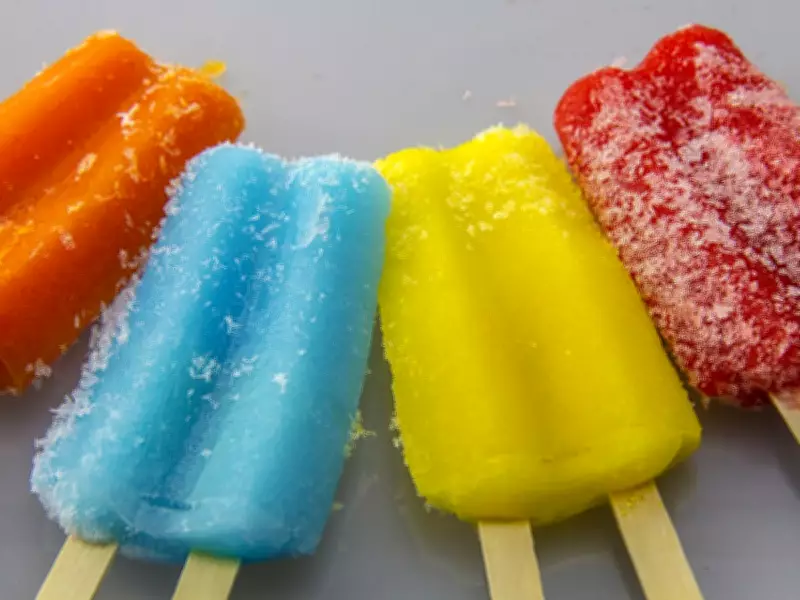
Some of the most familiar inventions began as happy accidents. For instance, a petri dish left open that grew mold led to a breakthrough. But few serendipitous discoveries are as sweet, or as deeply connected to childhood memories, as the invention of the Popsicle, also known as the ice pop. The modern ice pop on a stick is often traced back to a simple mistake: leaving a drink outside overnight on a cold night.
The Accidental Discovery
It all started in the winter of 1905 in the chilly city of San Francisco. A young schoolboy named Frank Epperson was mixing a sweet, powdered soda drink with water. He stirred the sweetened liquid with a small wooden stick. Distracted, Frank walked away and left the cup out on his porch overnight, completely forgetting about it.
As the winter temperature dropped in San Francisco, something remarkable happened. When Frank went outside the next morning, his liquid drink had turned into ice. The wooden mixing rod stood upright, frozen solid in the middle of the ice block. Intrigued, Frank pulled the stick, and the entire block of frozen soda popped out of the cup. He had stumbled upon a portable, easy-to-hold winter snack.

A Cohesive Origin Story
While this story may sound like a sweet family myth, it is well-documented in official historical records. In retellings and in major public institutions, this simple chain of events has been widely repeated, according to an in-depth biography published by the Lemelson-MIT Program. Although these are retrospective accounts, written long after that frosty morning, they confirm that Frank's porch accident was the real catalyst for the iconic brand.
The environmental context was crucial to the discovery. The cold San Francisco air was essential to freezing the mixture, according to the Smithsonian's Lemelson Center. It wasn't a product designed by scientists in a high-tech lab or a planned marketing test from a food company. It was simply a child's mistake on a home porch, combined with nature and a wooden stick in the wrong place at the right time, molding it all together into a refreshing treat.
The Long Road to a Patent
Frank had made his cool discovery back in 1905, but he did not immediately convert it into a commercial product. He lived his life, grew up, and waited nearly 20 years before he did anything business-wise with his childhood invention.
Frank Epperson finally applied for and filed a key patent application on June 11, 1924, according to official records at the National Archives. His official patent approval was not granted until two months later. The historical paperwork describes the invention as a "frozen lolly pop" and a "drink on a stick". That formal step marked the point where a private family mishap entered the legal and commercial world of international business.
Why the Sweet Idea Remained
This is why the ice lolly worked so well. The design was incredibly practical. Before Frank's discovery, eating a frozen treat from a cup was messy. It melted quickly on the hands, could easily spill, and usually required a spoon.
Sticking the frozen liquid onto a stick changed everything. It made the snack highly portable, immediate, and fun to eat. It was perfect for outdoor dining and the active lifestyles of children.
According to educational materials from the United States Patent and Trademark Office, Frank's story is still used today to teach students about the nature of innovation. It shows that great ideas often result from something unexpected. The real trick is to notice that weird result and choose to repeat it. Frank Epperson's frozen treat became a part of global history through patience, a simple accident, and later commercial effort.