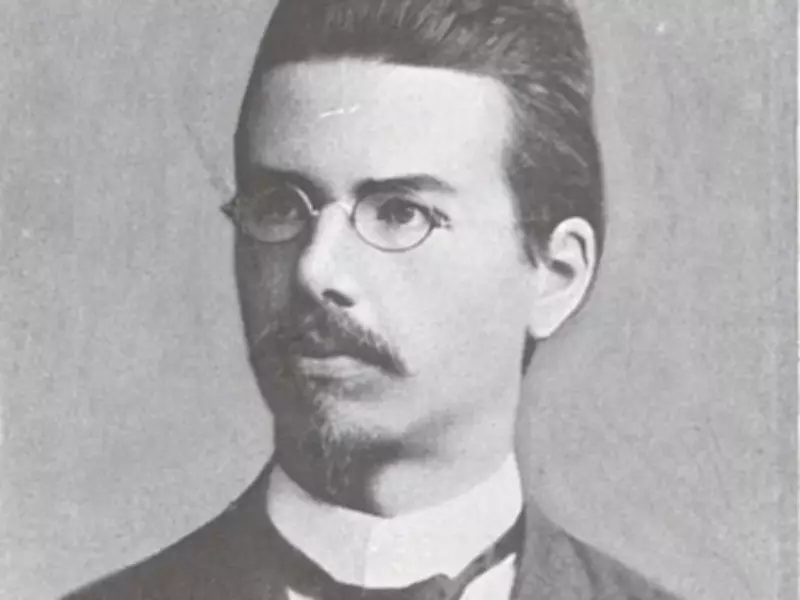
In our digital lives, it is easy to forget about the technology in our smooth smartphones, TVs, and flat screens. The foundation of liquid crystal display technology began with an accidental observation in 1888. It did not begin in an electronics laboratory with high-tech equipment; instead, it started when Austrian botanist Friedrich Reinitzer noticed a chemical sample exhibiting unusual behavior.
Reinitzer did not intend to create television screens. He was simply studying a cholesterol-derived compound called cholesteryl benzoate. As he tried to determine the exact melting point of the compound, he observed something that did not fit the conventional idea of melting. Rather than changing directly from a solid into a clear liquid, the substance appeared to melt in two stages. Initially, it transformed into a strange, dark liquid that, upon further heating to a higher temperature, suddenly became clear. This modest laboratory experiment would eventually change the way we interact with technology.
The Double Melting Point Confused Scientists
At the time, this behavior contradicted the simple concept of a crystal melting directly into a liquid. The prevailing understanding was that a solid crystal would melt and transform into a liquid. According to teaching materials from the University of Houston, Reinitzer realized that the effect was not a heating error but a repeatable property of the material. This was not an error in the heating procedure; rather, it was an actual, repeatable characteristic of the matter.

Seeking answers, Reinitzer shared his findings with Otto Lehmann, a German physicist skilled in studying crystals under microscopes. Lehmann discovered that the cloudy liquid flowed like a liquid but exhibited crystal-like order when viewed through a microscope. In other words, it flowed like a liquid while retaining the internal structure of a solid. In a historic review published by the National Center for Biotechnology Information, Lehmann officially identified this new state and later coined the term 'liquid crystals' for materials that flowed like liquids but behaved optically like crystals. The delay between observation and designation highlights the time required in science to create new categories for objects that defy conventional guidelines.
Long Journey Towards Electronic Consumer Products
For many years, liquid crystals remained merely a curiosity for academics. They posed an intriguing problem for physicists and chemists, but they had no practical application. A breakthrough occurred when researchers discovered that liquid crystals could respond to an electric field. Because liquid crystals maintain a semi-solid state, an electric field can alter the alignment of their molecules, thereby changing how light passes through the material.
The evolution from a laboratory concept to a commercially viable product was slow. According to a timeline published by the Royal Society of Chemistry, the first model of a liquid crystal display (LCD) appeared in the 1960s. Nearly eighty years after Reinitzer's initial observation, the technology finally found practical use in early liquid crystal displays. It required a global network of researchers to determine the best way to control how liquid crystals block or transmit light, ultimately producing the high-resolution images we rely on today.
Why an Accident-Related Discovery Is Still Relevant Today
Nowadays, liquid crystals have become a crucial aspect of daily life. They enable our electronics to be smaller, lighter, and more energy-efficient than the bulky televisions of the past. The story of Reinitzer and his double-melting crystal is a perfect example of how fundamental research can yield transformative results. Technological revolutions rarely begin with a strategic plan to develop a marketable product. In reality, they often start when a keen scientist refuses to overlook an anomaly.

A 2024 review in the journal Polymers states that liquid crystals were first identified by Reinitzer during an everyday laboratory test of cholesteryl benzoate. This history connects a multi-billion-dollar display industry to a single, carefully observed laboratory oddity. By noticing the chemical's unexpected behavior, Reinitzer discovered a middle ground of matter that exists between flow and order. His curiosity paved the way for the electronic displays that now connect the contemporary world.
About the Author
The TOI Science Desk is an inquisitive team of journalists, ceaselessly delving into the realms of discovery to curate a captivating collection of news, features, and articles from the vast and ever-evolving world of science for the readers of The Times of India. Consider us your scientific companion, delivering a daily dose of wonder and enlightenment. Whether it is the intricacies of genetic engineering, the marvels of space exploration, or the latest in artificial intelligence, the TOI Science Desk ensures you stay connected to the pulse of the scientific world. At the TOI Science Desk, we are not just reporters; we are storytellers of scientific narratives. We are committed to demystifying the intricacies of science, making it accessible and engaging for readers of all backgrounds. Join us as we craft knowledge with precision and passion, bringing you on a journey where the mysteries of the universe unfold with every word.