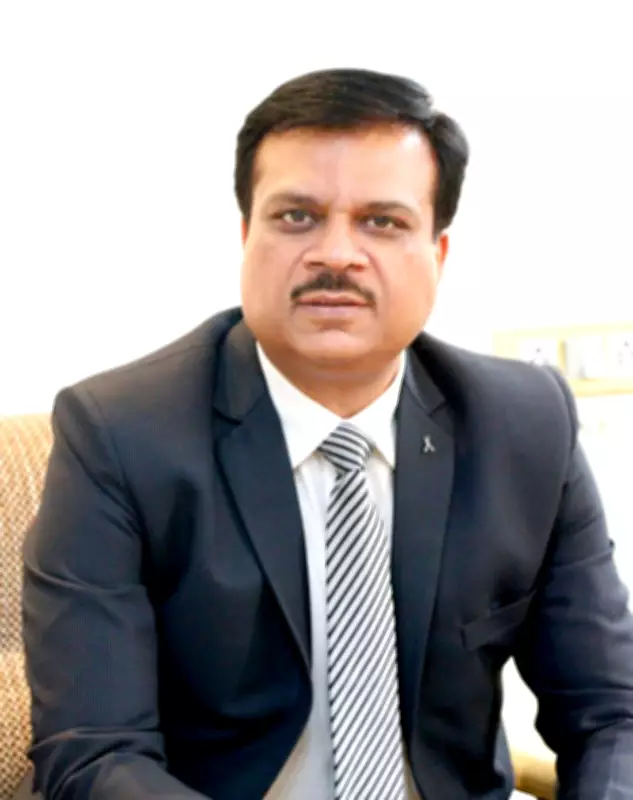
Prof. (Dr) Manoj Kumar, Vice Chancellor of DAV University, Jalandhar, has asserted that the vision of Viksit Bharat 2047 can be achieved by reviving India’s traditional knowledge systems in alignment with the National Education Policy (NEP) 2020. He made these remarks while emphasising the importance of the Indian Knowledge System (IKS), also known as Bhartiya Jñana Parampra, which encompasses a wide range of systematised disciplines and streams of knowledge that were developed and refined in India from ancient Vedic and pre-Vedic times.
Role of IKS in NEP 2020
The Ministry of Education, Government of India, has underscored the urgent need to revive and preserve the thousand-year-old traditional knowledge system by integrating it into the modern academic system through NEP 2020. The pursuit of knowledge (Jñana), wisdom (Prajña), and truth (Satya) has always been regarded in Indian thought and philosophy as the highest human goal. The Indian education system has historically produced great scholars such as Charaka, Susruta, Aryabhata, Varahamihira, Bhaskaracharya, Brahmagupta, Chanakya, Chakrapani Datta, Madhava, Panini, Patanjali, Nagarjuna, Gautama, Pingala, Sankardev, Maitreyi, Gargi, and Thiruvalluvar, among many others. These luminaries made seminal contributions to global knowledge in fields including mathematics, astronomy, metallurgy, medical science and surgery, civil engineering, architecture, shipbuilding and navigation, yoga, fine arts, and chess.
Indian culture and philosophy have had a profound influence on the world. To nurture and preserve these rich legacies for posterity, and to research, enhance, and apply them in new contexts, NEP 2020 recommends the incorporation of IKS into the curriculum at all levels of education.

UGC Guidelines for Undergraduate and Postgraduate Courses
To implement this vision, the University Grants Commission (UGC) constituted an expert committee to formulate guidelines for incorporating IKS into higher education curricula. UGC has envisioned a 10-year horizon for the application of these guidelines, with a revision and modification after five years to meet evolving needs. Every student enrolled in an undergraduate or postgraduate programme should be encouraged to take credit courses in IKS, amounting to at least five per cent of the total mandated credits.
Fundamental Courses Suggested by UGC
The UGC has listed several fundamental courses, including: Bharatavarsha – A Land of Rare Natural Endowments; Foundational Literature of Indian Civilisation; The Vedangas and Other Streams of Indian Knowledge System; Indian Language Sciences; Indian Mathematics; Indian Astronomy; Indian Health Sciences; Classical Literature in Sanskrit and Other Indian Languages; Indian Education; The Purpose of Knowledge in India; Methodology of Indian Knowledge System; Indian Architecture and Town Planning; Indian Fine Arts; Indian Agriculture; Indian Textiles; Indian Metallurgy; Indian Polity and Economy; and The Outreach of Indian Knowledge System.
Elective Courses Suggested by UGC
Among elective courses, the UGC has listed: Mathematics in the Vedas and Sulva Sutras; Panini’s Astadhyayi; Pingala’s Chandahsastra; Mathematics in the Jaina Texts; Development of Place Value System; Aryabhatiya of Aryabhata; Brahmasphutasiddhanta of Brahmagupta; Baksali Manuscript; Ganitasarasangraha of Mahavira; Development of Combinatorics; Lilavati of Bhaskaracarya; Bijaganita of Bhaskaracarya; Ganitakaumudi of Narayana Pandita; Magic Squares; Kerala School of Astronomy and Development of Calculus; Trigonometry and Spherical Trigonometry; and Proofs in Indian Mathematics. Indian Astronomy has been given special emphasis in the UGC guidelines.
Apart from elective courses in these and other disciplines that are part of IKS, such as Indian Logic, Indian Linguistics, Indian Metallurgy, and Indian Architecture, there can also be elective courses on special topics like Indian Algebra, Indian Astronomical Instruments, Indian Iconography, Indian Musical Instruments, and Water Management in Pre-British India. The revival and preservation of IKS through academia by integrating it into modern curricula will certainly help achieve the objective, vision, and mission of Viksit Bharat 2047.