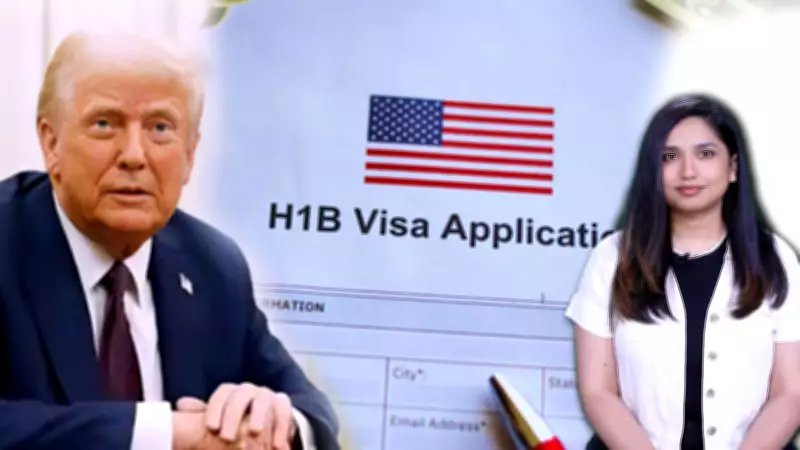
A United States federal court in Boston has struck down the Trump administration's $100,000 H-1B visa fee, declaring it unlawful. This ruling provides temporary relief to thousands of Indian professionals, who constitute approximately 70% of all H-1B visa holders in the United States. However, the legal landscape remains complicated because a Washington DC court had earlier upheld the same fee, creating a direct contradiction between two federal jurisdictions.
What the Boston Ruling Means
The Boston court's decision invalidates the fee imposed during the Trump era, which required employers to pay $100,000 for certain H-1B visa applications. The court found that the fee exceeded the government's statutory authority and was therefore unlawful. This ruling applies to cases within the jurisdiction of the Boston court, offering immediate relief to petitioners there.
Impact on Indian Professionals
Indians are the largest beneficiaries of the H-1B visa program, accounting for nearly 70% of all visas issued annually. The $100,000 fee had been a significant burden on both employers and employees, particularly in the technology sector. The Boston ruling, if upheld, could reduce costs for companies hiring foreign talent and potentially increase demand for Indian IT professionals.

The Legal Contradiction
While the Boston court struck down the fee, a separate federal court in Washington DC had previously upheld the same fee, ruling that it was within the government's authority. This split creates uncertainty, as the final outcome may depend on a higher court's review. The White House has indicated it will challenge the Boston ruling in an appellate court, prolonging the legal battle.
What Happens Next
The White House's appeal means that the Boston ruling may be stayed pending a higher court's decision. Legal experts expect the case to eventually reach the Supreme Court if the circuit courts issue conflicting rulings. In the meantime, H-1B applicants in jurisdictions covered by the Boston ruling may benefit from the fee being struck down, while those in other areas remain subject to the fee.
Broader Implications
The fee was part of a series of Trump-era policies aimed at restricting legal immigration and protecting American jobs. Its invalidation could signal a shift in judicial attitudes toward such measures. For Indian professionals, the outcome is critical, as it affects not only costs but also the overall attractiveness of the US as a destination for skilled workers.
In summary, while the Boston ruling offers temporary relief, the final verdict remains uncertain due to the conflicting decisions and the White House's planned appeal. Indian H-1B visa holders and employers should closely monitor developments as the legal process unfolds.