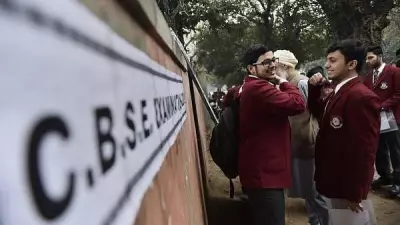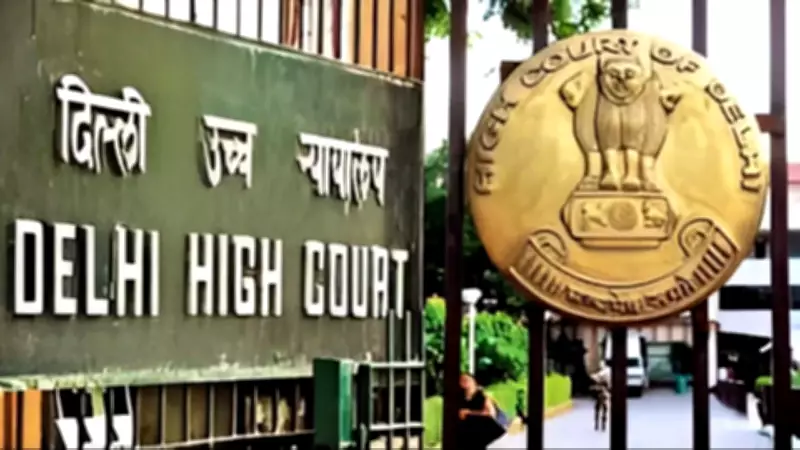
The Delhi High Court on Monday issued a notice to the Centre and the Central Board of Secondary Education (CBSE) regarding a petition filed by the National Students' Union of India (NSUI). The petition alleges widespread irregularities and deficiencies in the newly introduced On-Screen Marking (OSM) system. A vacation bench comprising Justices Neena Bansal Krishna and Madhu Jain directed the Department of Education and the CBSE to respond to the plea, scheduling the next hearing for June 12.
During the proceedings, CBSE's standing counsel, M.A. Niyazi, argued that the petition was filed by a political body. He stated, "It is a student wing of a political party. We do not want education to be politicized like this." In response, the counsel for NSUI countered that while the organization is indeed affiliated with a political party, such an association does not disqualify it from filing a petition in the interest of students and the public.
The plea, submitted on May 29 by NSUI chief Vinod Jakhar, contends that the board's repeated public clarifications regarding the OSM system have raised concerns among students and the public about the integrity of the evaluation process. The petition seeks directions for manual rechecking and physical verification of answer sheets in cases where students dispute the accuracy of scanned copies or the evaluation process. It emphasizes that "students cannot be made to suffer because of deficiencies in a system introduced by the authorities themselves."

The OSM system, which involves scanning answer sheets and marking them on-screen, was introduced by CBSE to streamline the evaluation process. However, the NSUI alleges that this system has led to errors, including missing pages, unclear scans, and incorrect totaling of marks. The petition highlights that such issues undermine the credibility of the examination results and cause undue stress to students and parents.
The court's notice to the Centre and CBSE marks a significant step in addressing these concerns. The outcome of the hearing on June 12 will determine whether the court orders a review of the OSM system or mandates alternative measures to ensure fair evaluation. This case underscores the ongoing debate between adopting technological advancements in education and safeguarding the rights and interests of students.
Background of the On-Screen Marking System
The CBSE introduced the OSM system for the 2023-24 academic session to enhance efficiency and reduce manual errors. Under this system, answer sheets are scanned and uploaded to a secure portal, where evaluators mark them on-screen. The board claims that this method ensures faster results and better transparency. However, critics argue that technical glitches and inadequate training of evaluators have led to numerous complaints.
Key Allegations in the NSUI Petition
- Large-scale irregularities in the scanning and uploading of answer sheets.
- Discrepancies between the scanned copies and original answer sheets.
- Incorrect evaluation due to unclear or incomplete scans.
- Lack of a proper mechanism for students to dispute errors.
The NSUI has demanded that CBSE provide a facility for physical verification of answer sheets and manual rechecking upon request. They argue that the current system places an unfair burden on students to prove errors, which is often impossible without access to original documents.
CBSE's Defense
CBSE has maintained that the OSM system is robust and has been implemented with adequate safeguards. The board has issued multiple public statements explaining the process and addressing common queries. However, the NSUI contends that these clarifications have only added to the confusion, as they fail to address specific grievances.
During the court hearing, CBSE's counsel emphasized that the system has been in place for several years and has been refined based on feedback. He urged the court to dismiss the petition, arguing that it is motivated by political interests rather than genuine student concerns.

Implications for Students and Education
This case highlights the challenges of digitizing examination processes in India. While technology offers benefits such as faster results and reduced paperwork, it also introduces new risks, including data security and system failures. For students, the stakes are high, as exam results determine their future academic and career opportunities.
The court's decision could set a precedent for how educational institutions handle disputes arising from digital evaluation systems. If the court orders manual rechecking, it may lead to increased workload for CBSE and potential delays in result declarations. Conversely, if the court upholds the OSM system, it may encourage other boards to adopt similar technologies.
About the Author
Koushiki Saha, a trainee journalist currently reporting for The Times of India, covers urban governance, infrastructure lapses, public grievances, and municipal policies with clarity and compassion. Still learning every day, she draws insights from fieldwork, lived experiences, and holding authorities accountable through persistent, people-focused reporting.