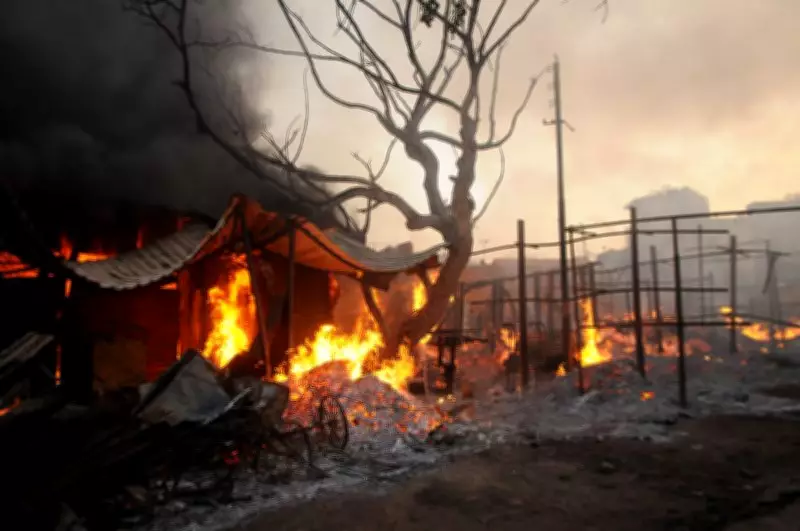
The recent fire incidents in a hotel in Delhi and at Bansawala Bazaar in Amritsar's Ram Bagh area have once again compelled us to reflect on whether we are truly safe in the buildings where we live and work. These tragedies have also exposed the shortcomings of the agencies responsible for preventing and controlling such incidents, resulting in the loss of precious human lives. There is often a complete disregard for fire safety measures at many establishments, and compliance with safety norms remains inadequate. Shopkeepers must take individual responsibility for conducting regular inspections to prevent short circuits and other hazards. They should also ensure that fire extinguishers are installed and maintained properly. The public, too, has a role to play. People frequently ignore the sirens of fire tenders and fail to give way to emergency vehicles. Law enforcement agencies should impose strict penalties on those who obstruct emergency services. In addition, all shopkeepers should be trained in the proper use of fire extinguishers and basic fire safety practices. Fire departments also need specialised equipment to tackle emergencies in old and congested cities like Amritsar, particularly in markets dealing with wood, bamboo, textiles and other highly combustible materials. A single loose wire in such areas can spark a catastrophe with devastating consequences.
Strengthen Response and Infrastructure
The recent fire outbreak at Bansawala Bazar has exposed serious shortcomings in the city's firefighting infrastructure and the lack of adequately trained personnel to handle fire emergencies. The walled city, with its narrow and congested lanes, is largely inaccessible to modern fire tenders with a capacity of 5,000 litres. Valuable time is often lost in arranging access to fire sites using older vehicles, resulting in delayed response and greater loss of life and property. At present, Amritsar has only five fire stations, which is inadequate for a city with a population of nearly 1.6 million. Additional fire stations equipped with modern firefighting technology should be established to cater to the growing population and expanding urban areas. The city also suffers from a shortage of functional water hydrants. Many existing hydrants remain dry, forcing fire tenders to rely on water from sarovars, malls and overhead tanks to control fires. More water hydrants should be installed and maintained to ensure a reliable water supply during emergencies. Furthermore, the fire services department is facing a shortage of trained manpower, making it difficult to tackle increasingly complex fire incidents, particularly those involving high-rise buildings. More skilled personnel should be recruited and provided with regular training to meet these challenges effectively. Last but not least, all fire stations should be connected through dedicated hotlines and kept on constant alert to ensure the fastest possible response to emergencies. Time is a critical factor in firefighting, and every minute saved can help prevent loss of life and reduce damage to property.

Additional Fire Stations Needed
The holy city of Amritsar has grown significantly in terms of population and commerce. Whether one lives within the walled city or in the outskirts, it is impossible to remain disconnected from the historic core because of its proximity to the Golden Temple, Jallianwala Bagh, Hall Bazaar, Katra Jaimal Singh and other major commercial and tourist destinations. Not only local residents but also thousands of tourists visit these areas every day. With rising temperatures, air conditioners have become a necessity rather than a luxury. Government-provided electricity subsidies have further increased their use. Consequently, electrical faults and short circuits are not uncommon. While material losses can eventually be recovered, the loss of human life is irreparable. The recent fire at Bansawala Bazaar in the Ram Bagh area has exposed serious shortcomings in the city's firefighting infrastructure. Many residents have expressed dissatisfaction over the delayed response of firefighters. The nearest fire station is located only a short distance from the site of the incident, yet questions remain. Was there sufficient space for fire tenders to reach the spot quickly, or were there other factors responsible for the delay? Although the fire station at Town Hall has earned recognition for its efficiency, the incident has highlighted a larger problem. The city's narrow lanes have become even more congested due to rampant encroachments by shopkeepers competing for every inch of commercial space. In addition, water tubewells and hydrants are scarce. Effective firefighting requires both an adequate water supply and sufficient space to connect hoses and operate equipment. Controlling a fire while navigating overhead electricity cables and crowded surroundings is an extremely challenging task. Amritsar urgently needs additional fire stations equipped with modern firefighting equipment. Encroachments must be removed strictly and consistently. The installation of portable fire extinguishers should be made mandatory in homes, shops, and commercial establishments. At least one member of every household and one employee in every shop should be trained in basic fire safety and in handling the initial stages of a fire emergency. Accidents may not occur every day, but when they do, they can quickly turn into catastrophes. Before another tragedy strikes, all stakeholders must play their part. The government must strengthen firefighting infrastructure, emergency personnel must remain fully prepared, and citizens must overcome their indifference towards basic fire safety practices. Only a collective effort can help prevent the loss of precious lives and property.

Regular and Sincere Training Needed
The Ram Bagh fire was very unfortunate as it burned away more than 20 shops reportedly. It was a massive fire, smoke of which reached many parts of the city. The following morning, as I was passing through this area, I personally visited the spot, joining many other locals. One thing that was constantly heard was the 'very late arrival' of the fire brigades. "What's the use of such a fire brigade department?" questioned one of the locals there, adding that "the fire had taken everything when their trucks arrived." Surprisingly from certain parts, smoke was still rising. It was a clear reminder that the fire brigade department of Amritsar needs to pull its socks. After all, one of the major fire departments was not far from Ram Bagh - about two kilometres away in the Town Hall. There should be regular and sincere training of the concerned employees including drivers for not only how to better extinguish the fire but also how to reach on time. A sad sarkari approach can't help but ruin everything. Some organisations, appointed by the Centre government, must check how the trainings are conducted in state run fire departments. This will surely help. Moreover, the fire department certainly needs better planning and coordination. Let's not forget the old adage, "Prevention is better than cure."
Lack of Specialised Equipment
The recent fire tragedy at Bansawala Bazaar at Ram Bagh, Amritsar, highlights serious flaws in the system. Several shortcomings were evident, with narrow lanes and illegal encroachments preventing fire tenders from reaching the epicentre of blazes swiftly. Sparks from unmanaged, tangled overhead wires are a primary trigger for short circuits, especially in densely packed markets. The fire department lacks sufficient equipment to control fires in multistorey buildings. The main fire stations are located very far away, which is why fire brigades cannot reach on time.
Integrate Fire Safety Mandates into Bylaws
The tragic fire at Bansawala Bazaar in Rambagh underscores a systemic crisis in urban firefighting infrastructure and town planning. Delayed emergency responses are rarely due to a lack of intent by firefighters; instead, they stem from deep-seated logistical and structural failures categorized into three core dimensions: Operational deficits: Municipalities face a severe 40% to 60% shortage of fire stations alongside acute personnel vacancies. Furthermore, while vertical urban growth accelerates, specialised high-altitude rescue equipment remains restricted to major metropolitan hubs and struggles to navigate dense traffic. Urban bottlenecks: Historic trading centres and unauthorised colonies feature tightly packed layouts with lanes narrower than 3 meters, physically blocking standard fire trucks. This is severely compounded by a shortage of agile, smaller "mini-tenders" and a largely dysfunctional or non-existent public fire hydrant network. Structural violations: Converting residential structures into commercial units overloads legacy electrical wiring, triggering short-circuits during peak summer heatwaves. Additionally, permanent iron window grills, heavy rolling shutters, and heat-vulnerable electronic smart locks frequently malfunction or trap occupants while obstructing rescue teams. To transition local governance from a reactive crisis response to proactive prevention, fire safety mandates must be deeply integrated into urban development bylaws. Key operational solutions include outsourcing routine safety compliance to empanelled private auditors to clear administrative backlogs, deploying cloud-connected IoT sensors for real-time monitoring of water levels and smoke detection, and establishing localised community first-responder units to control blazes during the critical first ten minutes.
Residents Should Not Be Silent Spectators
In scriptural wisdom, furies of fire are portentous events. Logically, however, they often stem from neglecting safety. Instead of relying solely on governmental aid, communities must prioritise prevention. We must secure electric wires, hazardous materials and high-risk zones like factories. Essential precautions include maintaining overhead water reservoirs, ensuring clear access roads and prominently displaying emergency numbers in every household. Each colony should maintain firefighting equipment in strategic locations and establish trained emergency response teams. Firefighting helpline numbers must get automatically connected to all units for coordinated redressal of emergent needs. Awareness of evacuation procedures is a sine qua non to avoid blind panic reactions. Building sanctions must mandate rigorous safeguards against short-circuiting. Furthermore, regular mock drills with clear signalling are essential. All able-bodied inhabitants should contribute their zeal rather than remaining silent spectators. Beyond immediate suppression, priority must be given to post-fire medical care, psychological counselling, and structured relief efforts. I am reminded of the inspiring story of the sparrow that repeatedly carried tiny drops of water to help extinguish a burning forest. When questioned about the futility of its efforts, the sparrow replied, "I want to be identified with the helpers, not the shirkers." Community participation en masse, coupled with expert intervention, is the mantra for effective disaster management. A proactive willingness to support administrative efforts can transform our response to such unforeseen calamities, ensuring public safety through collective vigilance, preparedness and shared responsibility.
Enforce Strict Building Regulations
The tragic fire at Bansawala Bazaar in Ram Bagh, which claimed an elderly man's life and gutted numerous shops, highlights serious concerns about urban fire safety. Residents' allegations of delayed fire brigade response point to potential gaps in emergency preparedness, whether due to traffic congestion, inadequate equipment or insufficient staffing. Many Indian cities, including those with dense markets like this, often struggle with ageing firefighting infrastructure, limited hydrants, and under-resourced stations unable to handle rapid escalation in congested areas. While some progress has been made through modernisation drives, the recurring nature of such incidents suggests we do not yet have sufficient capacity. Urgent investments in more fire stations, advanced vehicles, trained personnel and stricter building regulations are essential to prevent future losses. Public awareness and quicker response protocols must also improve.
Regular Awareness Campaigns Necessary
The recent massive fire at Bansawala Bazaar in the Ram Bagh area was a tragic incident which claimed the life of an elderly man and destroyed many shops, causing huge losses to traders. Fire brigade teams reached the spot late, raising serious questions about the city's firefighting preparedness. With crowded markets, narrow lanes and increasing commercial activity, such incidents can quickly turn disastrous if emergency services are not adequately equipped. The authorities must review the existing firefighting infrastructure, increase the number of fire stations and vehicles, and ensure faster response times. Regular safety inspections and awareness campaigns are also necessary to prevent such tragedies.
Improve Emergency Services
The tragic fire at Bansawala Bazaar that claimed a life and destroyed several shops has once again sparked concerns about firefighting infrastructure. While many residents have blamed the delayed arrival of fire brigade teams, it is important to consider other factors as well. Markets such as Bansawala Bazaar are often densely packed, with narrow lanes, illegal encroachments, and inadequate fire safety measures. Even the best equipped fire engines may struggle to reach the affected area quickly under such conditions. Therefore, the problem may not solely be the number of fire stations or vehicles. The authorities must certainly strengthen emergency services, but equal attention should be paid to enforcing fire safety norms, conducting regular inspections, and ensuring clear access routes in commercial areas. Preventing fires and enabling swift access can be just as important as increasing firefighting resources.
Introduce Dedicated Emergency Routes
The tragic fire at Bansawala Bazaar has once again exposed gaps in the city’s fire-fighting infrastructure. While fire-fighters work under difficult conditions, congested markets, narrow lanes and inadequate equipment often delay rescue operations. Amritsar needs more fire stations, modern fire tenders and dedicated emergency routes in busy commercial areas. Regular fire safety audits of markets should be made mandatory, and shopkeepers must be trained in the use of fire extinguishers. Hydrants should be installed and maintained across the city. Quick response during the first few minutes of a fire can save lives and property. Strengthening preparedness is essential to prevent such devastating incidents in the future.
Enforce Laws, Penalise Violators
Amritsar’s firefighting resources appear insufficient for handling large-scale emergencies in crowded commercial zones. Markets located in the narrow streets of walled city are highly vulnerable due to narrow streets and heavy electrical loads. Even a minor delay can allow flames to spread rapidly. The municipal corporation along with district administration should conduct regular inspections, enforce fire safety norms and penalise violations. More fire stations in strategic locations would reduce response time. Emergency drills involving traders and residents should also be organised. Fire safety should not become a concern only after a tragedy. Preventive measures and better infrastructure are the need of the hour.
Use Technology for Swift Response
The recent fire is a wake-up call for both authorities and citizens. Firefighters often face challenges such as traffic congestion, encroachments and lack of access to water sources. To improve emergency response, the city should install functioning fire hydrants in major markets and ensure roads remain accessible for rescue vehicles. Commercial establishments must be required to maintain fire extinguishers and emergency exits. Technology such as GPS-based dispatch systems can further reduce response times. A safer city requires cooperation between government agencies, businesses and residents. Fire safety must become a collective responsibility.
Proactive Approach Is Necessary
The loss of life and destruction caused by the Bansawala Bazaar fire is deeply distressing. Such incidents highlight the urgent need to review Amritsar’s disaster preparedness. The city should invest in advanced firefighting vehicles designed for narrow streets and congested markets. Electrical safety inspections should be conducted regularly, especially in old commercial areas. Traders’ associations can also play a role by promoting awareness and compliance with safety standards. Fire stations should be adequately staffed and equipped throughout the year. A proactive approach will help reduce risks and ensure faster action when emergencies occur.
Expand Brigade Fleet, Recruit Personnel
I believe Amritsar needs stronger firefighting infrastructure to cope with growing urban challenges. Large markets, increasing population and ageing electrical systems have heightened fire risks. Authorities should expand the fire brigade fleet, recruit more personnel and establish response centres closer to vulnerable areas. At the same time, strict enforcement of building and fire safety regulations is essential. Regular mock drills can help residents and shopkeepers react effectively during emergencies. The Bansawala Bazaar incident should serve as an opportunity to strengthen preparedness and build a safer environment for everyone in the city.
Public Awareness Is Equally Important
The Bansawala Bazaar tragedy raises serious concerns about fire safety in Amritsar. Whether the fire brigade arrived late or not, the scale of damage indicates that our emergency response system requires improvement. The city has expanded rapidly, but fire-fighting infrastructure has not kept pace. Busy markets with old buildings, tangled wiring and limited access make fire-fighting difficult. Authorities should increase manpower, upgrade equipment and establish smaller fire response units in densely populated areas. Public awareness campaigns on fire prevention are equally important. Investing in better infrastructure today can help avoid loss of life and livelihoods tomorrow.