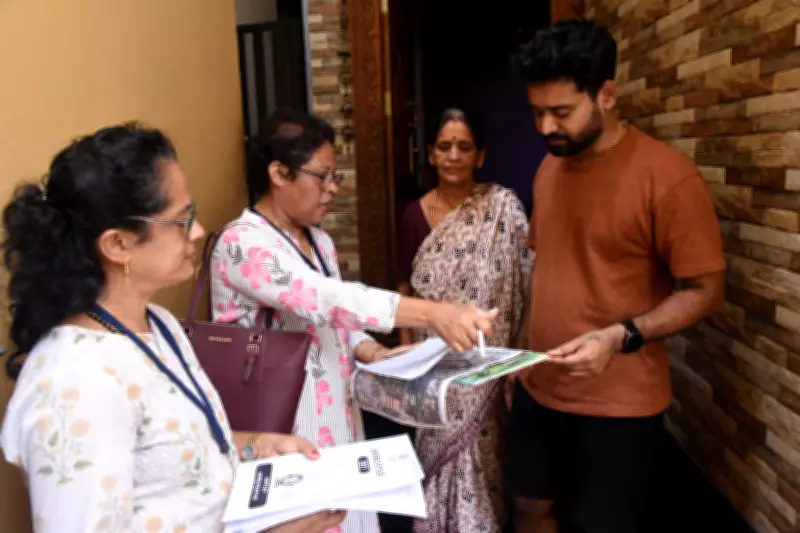
Hyderabad: The house-listing and housing census exercise, which marks the first phase of Census 2027 in Telangana, concluded on Tuesday. The state's household count is expected to exceed approximately 1.15 crore, reflecting a nearly 38% increase from the 83.6 lakh households recorded during Census 2011.
The extensive operation was carried out by nearly 89,000 census personnel and was further supplemented by self-enumeration from more than five lakh residents. The census process began with a self-enumeration window that ran from April 26 to May 10, followed by door-to-door house-listing and housing census activities conducted from May 11 to June 9.
Official sources stated, “The exact number of households will be revealed later by the Registrar General and Census Commissioner of India. Naturally, the number of households has increased since the last Census.”

The projected household count is higher than the figures recorded in Telangana’s caste survey, which covered around 1.12 crore families. If the final census count crosses 1.15 crore households, the state would have added nearly 31.5 lakh households since 2011, despite relatively modest population growth during the period. The caste survey estimated Telangana’s population at around 3.7 crore and covered about 1.12 crore families, translating into an average family size of roughly 3.3 persons. In comparison, Census 2011, which was conducted in undivided Andhra Pradesh, recorded a population of about 3.5 crore and 83.6 lakh households in the Telangana region, resulting in an average household size of approximately 4.2 persons.
Census definitions can significantly influence household numbers. A single census house can contain multiple households, each defined as a group of persons who normally live together and share a common kitchen. Members of the same family living under one roof may be counted as separate households if they maintain separate kitchens. Conversely, unrelated individuals living together and sharing meals may be classified as a single household. Therefore, a census house can contain one or several households.
The census also categorises households into normal households, institutional households—such as those in hostels, hotels, hospitals, old-age homes, and prisons—and houseless households, comprising people living on pavements, railway platforms, under flyovers, and in other open spaces.
The rise in the number of households has important implications for housing, drinking water, electricity, sanitation, and welfare planning. Governments increasingly have to provide services to a larger number of family units even when overall population growth remains moderate.
The house-listing phase will form the foundation for the population enumeration exercise of Census 2027 and is expected to provide the clearest picture yet of Telangana’s demographic transformation since the state’s formation.