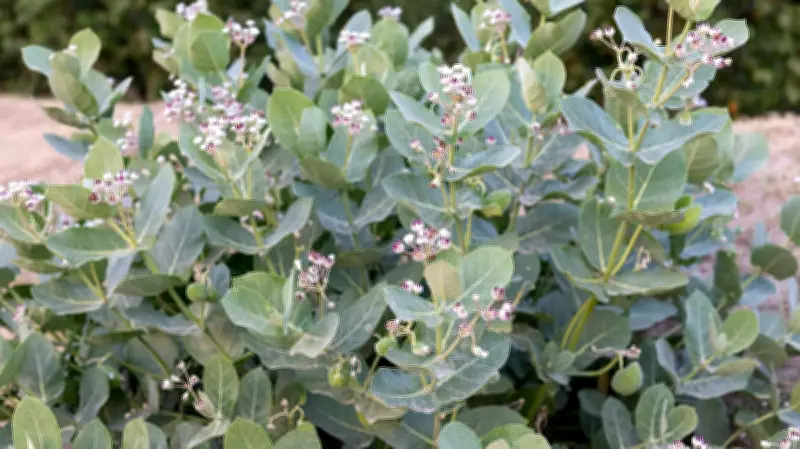
At Navilu Kaadu, we rarely clear weeds, and when we do, the giant milkweeds inevitably get clearance to stay. This resilient plant, known scientifically as Calotropis gigantea, has earned its place in our ecosystem and our hearts.
Why Giant Milkweed Survives
The giant milkweed is a hardy shrub that thrives in poor soil and harsh conditions. Its deep roots help prevent erosion, and its large leaves provide shelter for insects and small animals. But its value goes beyond ecology.
Traditional Uses
In local traditions, the giant milkweed is used in herbal remedies and rituals. The latex from its stems is applied to wounds, and the flowers are offered in temples. However, one of its most fascinating uses is in tea.

Milkweed Tea
Yes, you read that right. The giant milkweed can be brewed into a tea that is said to have medicinal properties. The leaves and flowers are dried and steeped to create a soothing beverage believed to aid digestion and boost immunity. While scientific evidence is limited, the practice persists in rural communities.
Biodiversity Benefits
At Navilu Kaadu, we prioritize biodiversity. The giant milkweed attracts pollinators like bees and butterflies, and its seeds are food for birds. By allowing this weed to flourish, we support a web of life that would otherwise be diminished.
So next time you see a giant milkweed, don't dismiss it as a nuisance. It might just be the most valuable plant in the patch.