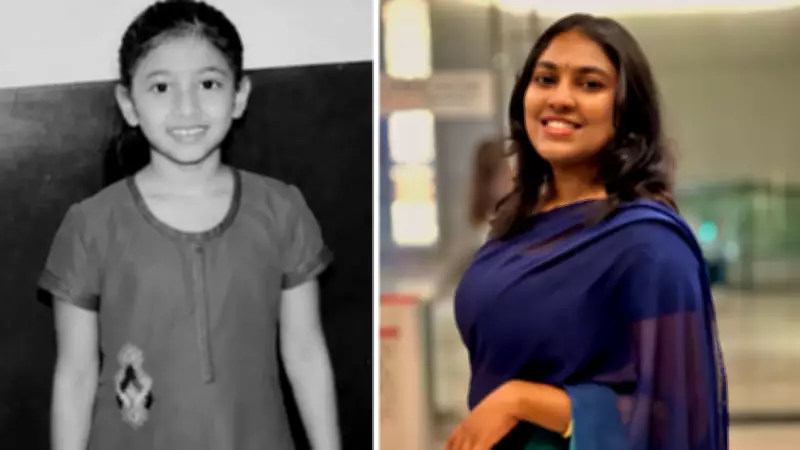
Some childhood memories stay with us because they are filled with joy. Others linger because they change how we see the world forever. For Tulcy Jana, now 26, a memory from when she was eight became a trauma she carried for years. It was a secret she could not name, a wound she did not know how to explain, and a trauma that shaped much of her journey into adulthood. She had no words for it then. She barely has easy ones now. But she is finally, fully, telling it.
A Childhood Shadowed by Betrayal
Reflecting on her childhood, Tulcy says she learned a difficult truth far earlier than most children should. 'At eight years old, I learned that monsters don't live under your bed. Sometimes, they eat at your home, play with you, and pretend to be a part of your family,' she said. Speaking to Humans of Bombay, she described growing up in an unusual household. Her parents had adopted 10 children from difficult backgrounds, all in the hope of giving them a better life. Among them was a boy 12 years older than her—someone who shared her dining table, her childhood spaces, and her family.
The Afternoon That Changed Everything
One afternoon, he invited her to play. 'He called me to his house. When I went there, he pushed me against the wall and molested me. When I tried to escape, he held me forcefully, and just when I was about to cry, he let me go.' The eight-year-old returned home carrying something she did not yet understand. 'At eight, you don't have the vocabulary for that kind of trauma,' she says. 'You just carry a heavy, suffocating weight.' So she carried it in silence for years.

Building a Life Amidst the Pain
But while the trauma stayed, so did her determination to build a future for herself. 'I poured my pain into my education and career, so I would never have to rely on anyone for security,' she explains. It worked, on the surface. She earned an Economics Honours degree. She landed a stable job. From the outside, the picture looked whole. However, success does not seal emotional wounds. It just keeps you busy enough not to notice them bleeding.
In her twenties, she discovered another path toward healing. 'I chose art to heal my mind. I decided to direct a short film to give a voice to other survivors and smash the stigma around trauma.' Frame by frame, she began reconstructing herself, building a safe space on her own terms. 'Slowly, I built a safe space of my own. Yet, true closure required facing the source of my ghost.' That moment arrived only recently.
Standing in Front of the Monster
More than a decade after that afternoon, Tulcy did something most survivors only imagine. She went back—not for revenge, not out of rage, but because something unfinished had been living inside her chest for too long, and she was tired of it. 'I didn't want revenge. I wanted him to hold the weight of his own actions.'
She stood in front of the man who had been the monster of her childhood nightmares. She looked him in the eye and told him exactly what he had done to her that day. 'Seeing him tremble was a revelation. The monster from my childhood nightmares was just a weak, cowardly man.' Then came words she had waited years to hear: 'I am so sorry.' Tulcy says a physical weight lifted off her shoulders that day.
The Shame Never Belonged to Me
Here is what Tulcy wants you to understand, and she is deliberate about this: his apology did not save her. She had already done the saving herself. What the apology gave her was something different. 'That apology was the final proof that the shame never belonged to me.' It never did. It never does. But it can take a very long time and enormous courage to truly believe that.
Today, Tulcy shares her story not because it is easy, but because she hopes it might reach someone carrying a similar burden in silence. Her message is direct: 'Your trauma is a chapter of your past, but it does not define your future.' For Tulcy Jana, healing was never about erasing what had happened to her. It was about refusing to let one stolen afternoon write the rest of her story.