Panaji: The Goa-based ICAR-Central Coastal Agricultural Research Institute (ICAR-CCARI) has launched an extensive campaign to promote the cultivation of super napier grass across Goa, as part of the nationwide Khet Bachao Abhiyan, which commenced on June 1.
Campaign Initiation and Expansion Plans
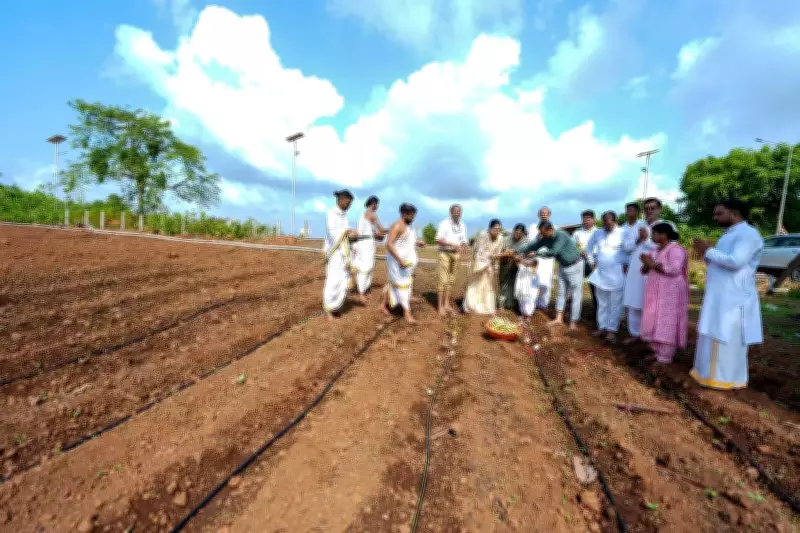
The campaign began with the planting of hybrid napier fodder grass on a one-acre plot at Tapobhumi, Kundaim. Over the coming year, the initiative is set to expand to 200 acres across Goa under natural farming practices.
Parveen Kumar, director of ICAR-CCARI, Goa, stated, "The plantation drive is strictly following natural farming methodologies designed to rejuvenate and improve soil health. Beyond agricultural productivity, the project aims to promote the widespread adoption of natural farming across Goa, strengthen local cow conservation initiatives, preserve and revitalise India's ancient 'Rishi-Krishi' traditions and foster sustainable, long-term agricultural practices in the region."

Benefits of Super Napier Grass
Super napier is a high-yielding perennial hybrid fodder grass that requires about 75 days for the first harvest and can subsequently be harvested every 40 to 45 days. Under suitable management conditions, it is capable of producing between 300 and 500 metric tonnes of green fodder per hectare annually.
Agricultural scientists believe that large-scale adoption of super napier cultivation can improve the availability of quality fodder throughout the year, reducing feed shortages faced by livestock owners. The initiative is expected to particularly benefit dairy farmers by ensuring a consistent supply of nutritious green fodder.
Natural Farming and Soil Health
The institute has been actively promoting sustainable nutrient management, green manuring and integrated farming approaches to improve long-term soil productivity and reduce dependence on chemical inputs.
Shripad Bhat, Senior Scientist, Agriculture Economics, ICAR-CCARI, noted, "Unlike other parts of the country which are burdened by intensive, chemical-heavy farming, Goa's traditional agriculture maintains a relatively low chemical input intensity."
This campaign underscores ICAR-CCARI's commitment to advancing natural farming and sustainable agriculture in Goa, aiming to create a model that can be replicated in other regions.