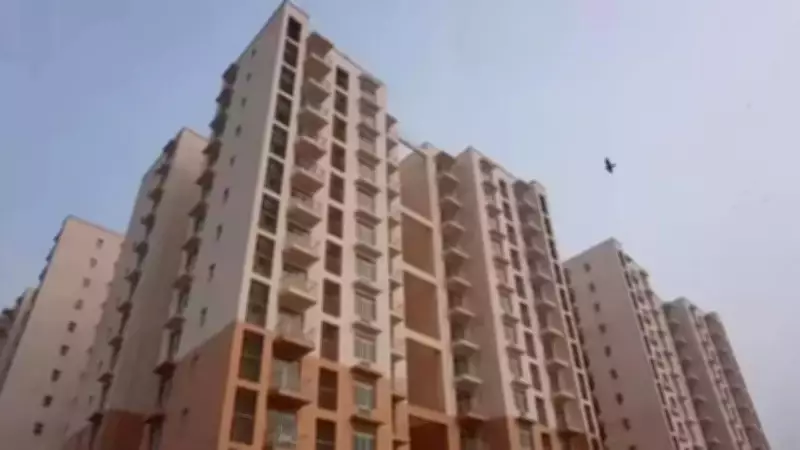
The Delhi Development Authority (DDA) offers a pathway to homeownership in the national capital through its various housing schemes. If you are considering owning a home in Delhi via a DDA scheme, this guide simplifies the application process, eligibility criteria, and essential details you need to know before applying.
Understanding the Delhi Development Authority (DDA)
The DDA is a statutory body responsible for the planned development of Delhi, overseeing housing, land management, and urban infrastructure. It constructs and allocates residential and commercial properties, playing a pivotal role in shaping the city’s growth. Through initiatives like the Nagrik Awaas Yojana, Towering Heights Scheme, and Janta Awaas Yojana, the DDA offers residential flats for different income groups, aiming to make affordable housing more accessible across Delhi.
How to Get a DDA Flat Allotment
Once construction is completed, DDA flats are allotted to registered applicants under various housing registration schemes based on their income categories. For the Higher Income Group (HIG) and Middle Income Group (MIG) categories, applications are invited through public notices published in leading newspapers when flats become available. A detailed priced brochure outlining terms, conditions, and eligibility criteria is available for purchase at DDA sales counters at Vikas Sadan and INA, as well as through designated banks. The allotment process is conducted via a computerized draw of lots after thorough scrutiny of applications to ensure compliance with eligibility norms and scheme conditions.

Eligibility Criteria for DDA Housing Schemes
To apply for a DDA flat, you must meet the following requirements:
- You must be a citizen of India.
- You should be at least 18 years old on the last day of application submission.
- You must have no legal restriction regarding owning property in Delhi.
- You need to provide details of a savings account in any bank in the applicant’s name only in the application form.
- A Permanent Account Number (PAN) is mandatory.
- For joint applications under the SC/ST Reserved Category, the joint applicant or co-applicant must be from within your family.
- For joint applications under War Widows, Persons with Disabilities (Divyangjan), Ex-servicemen, and other reserved categories, you must fall within the respective category, and your joint applicant must be from within the family.
Here, ‘family’ includes your parents, blood relatives, spouse, or any dependent relative, including unmarried children.
What to Do If You Lose Documents Related to Your DDA Flat
If you misplace original documents related to your registered or allotted DDA residence, you must submit a formal request to the Deputy Director of the concerned Housing Branch, along with required supporting documents. These typically include an affidavit for the registration certificate, an indemnity bond, an affidavit related to the fixed deposit receipt (FDR), and an indemnity bond for the lost registration record. Additionally, you must provide a copy of the original FIR, verified identity documents, and a copy of the public notice published in a leading newspaper declaring the loss of the documents.
Ready to make a smarter property decision? Build your legacy with TOI Homes.