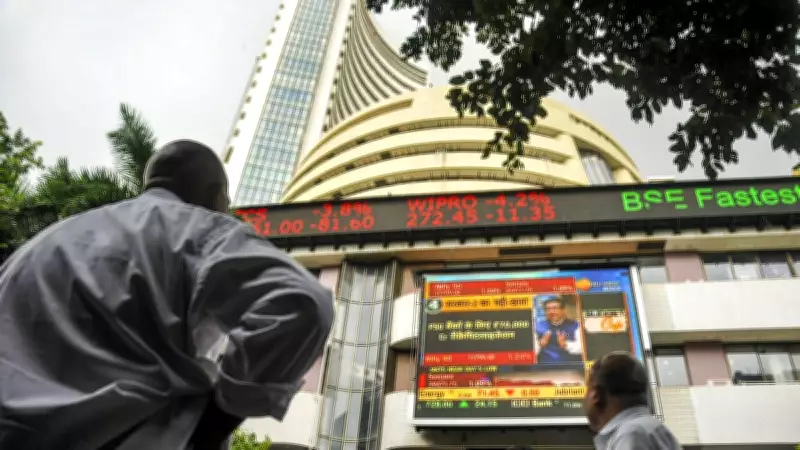
Indian stock markets closed marginally lower on Thursday, dragged down by the Reserve Bank of India's (RBI) decision to lower its growth expectations for the economy. The 30-share BSE Sensex declined 116.67 points, or 0.16%, to settle at 74,243.34, while the broader 50-share NSE Nifty dipped 49.85 points, or 0.21%, to end at 23,366.70.
Market Performance
The benchmark indices opened on a weak note and remained under pressure throughout the session, as investors reacted to the RBI's monetary policy statement. The central bank, in its bi-monthly review, revised down its GDP growth projection for the current fiscal year, citing global headwinds and domestic inflationary pressures. This move dampened market sentiment, leading to selling pressure across most sectors.
Sectoral Impact
Among sectoral indices, banking, auto, and metal stocks witnessed significant declines. The Nifty Bank index fell over 0.5%, while the Nifty Auto and Nifty Metal indices also ended in the red. However, defensive sectors like IT and pharma managed to stay afloat, providing some support to the broader market.

Expert Views
Market analysts noted that the RBI's cautious stance was expected, but the magnitude of the growth cut surprised some participants. "The RBI's decision to lower growth forecasts reflects the challenges ahead for the Indian economy. Investors are now pricing in a prolonged period of tight monetary policy, which could weigh on corporate earnings," said a senior analyst at a leading brokerage firm.
Despite the negative close, the market breadth remained slightly positive, with more stocks advancing than declining on the BSE. This suggests that while large-cap stocks faced selling pressure, mid-cap and small-cap segments saw selective buying interest.
Outlook
Going forward, market participants will closely monitor global cues, including crude oil prices and the movement of the US dollar, as well as domestic inflation data. The RBI's next policy meeting in August will be a key event for investors, who will look for further clarity on the trajectory of interest rates and growth.